CHILDREN'S PORTRAITS · SESSION GUIDE
Children's Portraits on the South Shore: From Toddlers to Tweens
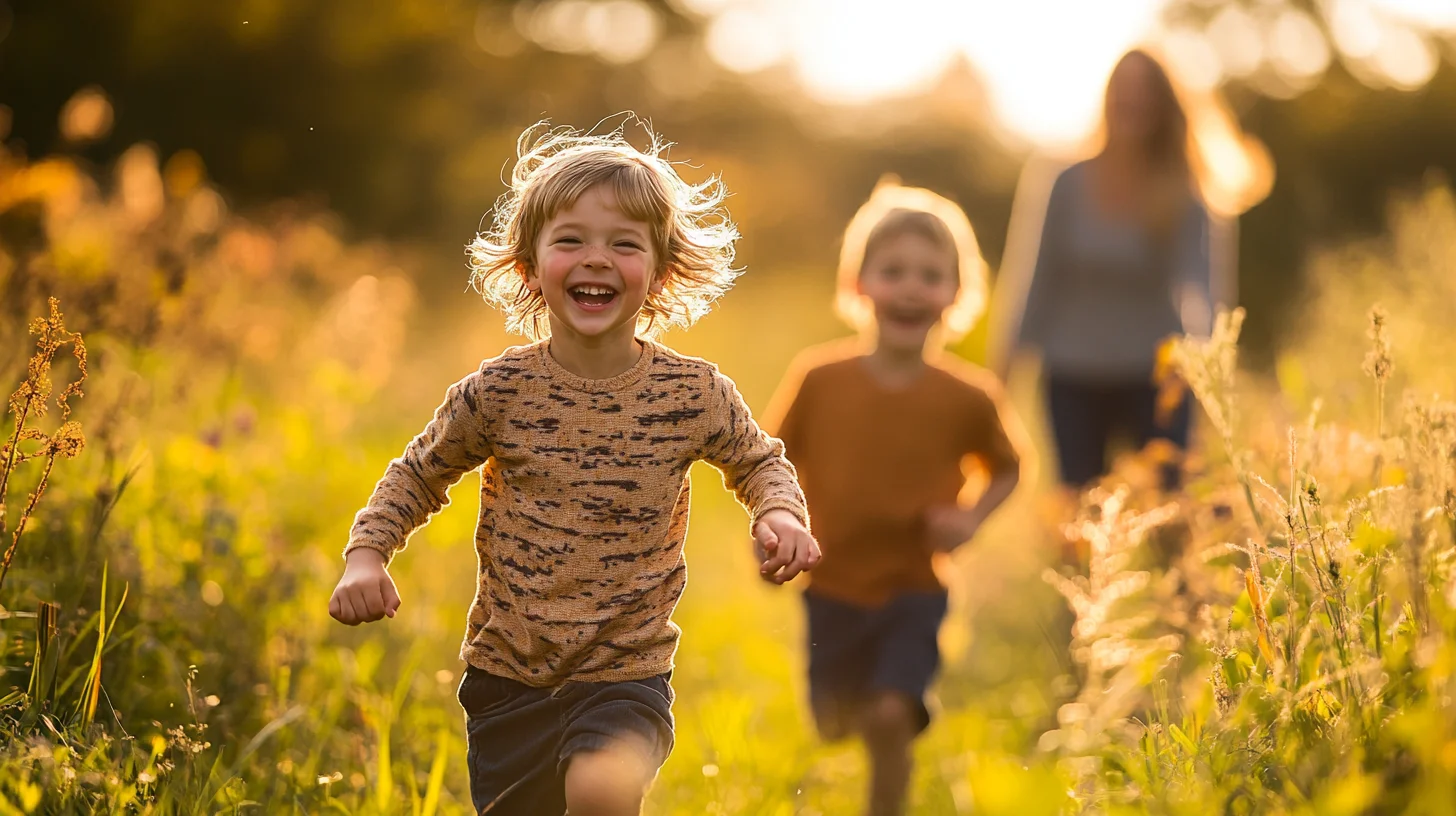
South Shore Photography photographs children and families across Hingham, Scituate, Norwell, Duxbury, Marshfield, Rockland, Plymouth, and the broader South Shore. Every week I'm out on a beach, a conservation field, or a wooded path with kids at some stage of growing up — and after hundreds of these sessions, I've developed a deep appreciation for how differently each age group works in front of a camera.
Children change fast. A four-year-old becomes a seven-year-old becomes an eleven-year-old, and none of those versions wait for you to get around to booking a session. The toddler who laughs at everything turns into the tween who can't decide whether to look cool or look natural. The kindergartner who runs toward the camera becomes the fourth-grader who crosses their arms and says they don't like having their picture taken. Every stage is remarkable, every stage is temporary, and every stage produces portraits that you will genuinely treasure in ways that are hard to anticipate in the moment. The outdoor South Shore environment — beaches, conservation fields, wooded paths — is the ideal setting for capturing children authentically, because it gives them somewhere to be themselves instead of somewhere to perform.
Why Outdoor Portraits Work Better for Children Than Studio Sessions
I've photographed children in both environments, and the difference is not subtle. Studio sessions require children to be still, cooperative, and present in an unfamiliar space with artificial lights and a backdrop they don't understand. For adults, that environment is manageable. For most children — especially younger ones — it's a setup for stiffness, anxiety, and the specific misery of being asked to smile on command.
Outdoor sessions work differently. Natural environments give children something to do. A toddler on a beach has sand to dig and waves to chase. A six-year-old on a conservation trail has rocks to climb, tall grass to run through, and leaves to throw. A ten-year-old at Scituate Lighthouse has a dramatic backdrop that actually makes them feel interesting rather than watched. That authentic activity — the real thing a child is doing in a real place — is what produces portraits that look alive rather than posed.
The South Shore provides extraordinary variety for this reason. No two sessions feel the same, because the environment itself is always offering something new to respond to. The tide is coming in at Duxbury. The conservation fields in Norwell have tall grass this week. The maple canopy at World's End is doing something remarkable in the afternoon light. That constant novelty keeps children engaged in a way that a studio with the same backdrop every time simply cannot.
Natural light also matters. It's more forgiving, more flattering, and more varied than artificial studio lighting. The golden hour light on a South Shore beach at 5 PM does things to a child's face that no studio strobe can replicate — a warmth, a softness, a quality that reads immediately as something worth keeping.
Photographing Toddlers (Ages 1–3)
Let me be honest with you: toddler sessions are unpredictable, high-energy, and often produce some of the most joyful images I have ever made. The unpredictability is a feature, not a bug. A toddler who decides to run the opposite direction, fall into a pile of leaves, or spend five minutes examining a single interesting rock is giving me genuine material to work with. The images that result from that kind of authentic engagement are the ones parents frame and keep for decades.
My approach with toddlers is simple: keep moving, stay flexible, and never try to force a pose. The moment you try to get a toddler to stand in a specific spot and look at the camera with a specific expression, you have lost the session. Instead, I work with whatever the child is naturally doing and position myself to capture it well. That means a lot of moving on my end, a lot of patience, and a willingness to shoot from odd angles to meet the child where they are.
What works beautifully for this age: beaches where they can dig and explore the water's edge, grassy conservation fields where they can run and roll, wooded paths where every root and leaf is something to investigate. What doesn't work: long sessions in hot, crowded locations, formal poses, or any situation where being still is required. Session length for toddlers should be 45 to 60 minutes maximum — often shorter is genuinely better, because a toddler who hits their limit is a toddler who will not cooperate with anything.
Practical guidance: schedule after nap time, never before. Bring snacks. Dress children in comfortable clothing with easy on/off layers — a toddler who is physically uncomfortable will let everyone know about it. And come prepared for the reality that the best images of a toddler session often happen in the first 20 minutes, before energy and patience both run down.
One thing I always emphasize: parents are part of the toddler session. The interaction between a parent and a toddler — the way a child runs toward mom, the way dad lifts them overhead and both laugh, the quiet moment of a child leaning against a parent's shoulder — produces some of the most emotionally resonant images in any portrait session. Some of the greatest toddler portraits I've made barely show the child's face at all; they show the relationship.
For families approaching the one-year milestone specifically, see the dedicated cake smash photography service and the companion outdoor first birthday photoshoot locations guide — both cover the format, timing, and South Shore locations that work best for twelve-month sessions.
Photographing Young Children (Ages 4–7)
This age group is often the easiest — and that's not something I say lightly, having worked with every age range. Children in the four-to-seven window are old enough to understand simple direction, old enough to engage in genuine conversation, and young enough to still be naturally and unselfconsciously playful. They haven't developed the camera-consciousness that starts creeping in around age eight or nine. They still just want to have fun.
My approach with this age is direction through activities rather than direction through poses. “Run to that tree as fast as you can” produces a completely different result than “stand here and smile.” “Show me how you skip” produces genuine movement and natural expression. “Go pick up the biggest rock you can find” buys me 90 seconds of authentic focus on a task, and when they turn around with the rock, the expression on their face is real. I am always photographing the result of an activity, not asking for a performance of happiness.
South Shore locations I reach for first with this age group: World's End in Hingham for the wide carriage roads where kids can run freely in every direction, conservation fields in Norwell for the tall grass that kids this age find endlessly fascinating, and beaches in early morning or late afternoon when the crowds are gone and the light is exceptional. Give a six-year-old a beach with low tide and soft light and you will have more material than you can use.
This is also the age where sibling portraits become truly beautiful. The older child instinctively takes care of the younger one — a hand offered, a quick hug, a shared joke — and those moments of genuine sibling affection are irreplaceable. I always carve out time for sibling portraits within a broader family session when children are in this age window together.
Bring a favorite toy or small prop for moments when direction stalls. Something the child is genuinely attached to gives them a comfortable anchor and often produces the most natural expressions of the session. Comfortable shoes for running are non-negotiable.
Photographing Tweens (Ages 8–12)
Tweens are the most underserved age group in portrait photography. Families often skip formal portraits during these years — the child has aged out of the “cute baby stage” and the senior portrait session is still years away. So the eight-to-twelve window passes largely undocumented, which is a real loss, because these years are full of distinct personality that is worth capturing before it changes again.
The challenge is real: tweens can be self-conscious, camera-aware, and genuinely reluctant to seem enthusiastic in front of their parents. Asking a ten-year-old to smile naturally is roughly equivalent to asking them to perform spontaneity — the request destroys the thing it's asking for. Traditional portrait approaches that work beautifully with younger children often land flat or produce forced results with this age group.
The approach that works: treat them like collaborators, not subjects. Before we even pick up a camera, I ask what they care about, what they want to do, where they want to go. A kid who has a say in the session shows up differently than a kid who has been told to get ready because they're getting their picture taken. That sense of ownership changes everything — their posture, their energy, their willingness to engage.
South Shore locations that resonate with tweens: the Scituate Lighthouse area for its dramatic, adventurous feel — kids this age respond to locations that feel meaningful rather than decorative. Duxbury Beach for the open, independent-feeling landscape. Conservation trails where the child can lead rather than follow. Anywhere that feels like an experience rather than a backdrop.
Incorporating a child's passion into the session is one of the most reliable ways to unlock authentic engagement. A kid who plays guitar brings the guitar. A soccer player brings a ball. A kid who loves their dog brings the dog. That genuine connection to something they care about produces expression and energy that posed setups simply cannot manufacture. The resulting portraits look real because they are real.
What to avoid: forcing smiles, over-directing, or treating a twelve-year-old like a seven-year-old. They notice. The fastest way to lose a tween's cooperation is to patronize them. The fastest way to earn it is to respect them.
Family Portraits With Multiple Age Ranges
The most common scenario I encounter is a family with children at completely different developmental stages — a two-year-old, a six-year-old, and a ten-year-old, for instance — each requiring a different approach and bringing a different energy level to the session. Getting great portraits of all three, plus the family together, takes deliberate structure.
My strategy: lead with the most unpredictable child while everyone's energy is fresh. For a family with a toddler, that means starting with the toddler-centered work — family group images, toddler-parent interaction — in the first 20 to 30 minutes, before the toddler runs out of patience. Then shift to the older children, who can sustain engagement longer and don't require the same level of constant movement.
Sibling portraits are a brief but powerful part of any multi-child family session. Even just a few minutes of the kids together without parents in the frame produces images with a completely different quality — a more candid sibling dynamic, the way they actually are with each other. I always make time for this.
The family group itself should be structured differently depending on the children's ages. For families with young children, movement-based group shots — walking together, everyone running toward the camera — work better than static poses. For families with older children, a more composed group with genuine interaction between family members produces images that look timeless rather than staged.
What to Expect in the Gallery
A typical gallery from a children's or family portrait session contains between 35 and 65 edited images, delivered within two weeks of the session. The mix varies by family but generally includes: candid movement shots from throughout the session, composed portraits of individual children, family group images in multiple configurations, sibling combinations, and quieter moments between family members.
I edit for natural color, genuine expression, and images that will look as good in ten years as they do today. I don't deliver every frame I shoot — I deliver the images that are actually worth having. That editorial judgment is part of what you're hiring me for.
Children's portraits are among the highest-value items to print large and display. The images that matter most in twenty years are the ones of your children at each specific age — the ones that show exactly who they were at four, at nine, at twelve, before each of those versions disappeared and became the next one. A gallery on your phone is a convenience; a print on your wall is a reckoning with how fast it all goes. I always encourage families to print at least one or two images from each session, because digital files have a way of staying in the gallery forever and getting looked at almost never.
Frequently Asked Questions
What age is best for children's portrait sessions?
Every age has something exceptional to offer. Toddlers (1-3) produce some of the most genuinely joyful images — pure movement, delight, and authenticity. Ages 4-7 are often the easiest to work with because children in this window can follow simple direction while still being naturally playful. Tweens (8-12) produce portraits with real personality when approached the right way. The honest answer is that the best age is right now, because every stage disappears faster than you expect.
How do you get toddlers to cooperate for portraits?
I don't try to make toddlers “cooperate” in the traditional sense — I work with their natural energy instead. Give a toddler something real to do (dig in sand, run to a parent, explore a path) and you get genuine, joyful images that posed setups can't produce. I keep sessions short (45-60 minutes), stay flexible, and accept that some of the best images come from the unscripted moments. I always tell parents: the session is going well even when it feels like chaos.
My child is very self-conscious around cameras. Will the session still work?
Yes — and this is more common than parents expect. My approach is to never draw attention to the camera or ask for a “good smile.” Instead, I direct through activities, conversation, and movement that gives self-conscious children something to focus on besides the camera. With tweens especially, giving them creative input (asking what they want to do, where they want to go, what matters to them) transforms the energy of the session. The images that result look natural because we created real moments, not performance.
Should I book an individual children's session or include them in a family session?
Both have value. Family sessions capture the relationships between family members — the dynamics, the affection, the way your children interact with each other and with you. Individual children's sessions focus entirely on each child and produce portraits with deeper personality. For most families, I recommend including individual portrait time within a family session rather than booking separate sessions — it's more efficient and still gives each child meaningful time in front of the camera.
What locations on the South Shore work best for children's portraits?
It depends on the child's age and personality. For toddlers and young children, beaches (for digging and water play), grassy conservation fields (for running), and wooded paths (for exploring) are all excellent. For tweens, locations with a sense of drama or independence — Scituate Lighthouse, Duxbury Beach, conservation trails — work better because they feel less “portrait session” and more like an adventure. During our consultation, we talk through what your children love and choose accordingly.
PRO TIP
“The families who end up with the most authentic children's portraits are the ones who stop worrying about perfect smiles and let their kids be themselves. A genuine laugh during a game of chase is worth a hundred posed grins. My job is to create the conditions for real moments — and then be ready when they happen.”
Book Your Children's Portrait Session
South Shore Photography photographs children of all ages across Hingham, Norwell, Scituate, Duxbury, Rockland, Plymouth, and the South Shore. Reach out to plan your session.
PILLAR GUIDE
The Complete Guide to Family Portraits on the South Shore
This post focuses on outdoor children's portraits on the South Shore. For the full overview — every South Shore family portrait location, wardrobe by season, what to bring, and how to plan your session — read the complete pillar guide.
Full family session planning: timing, locations, packages →
ABOUT THE AUTHOR
Chris McCarthy is a portrait photographer based in Rockland, MA who has been photographing the South Shore full-time since opening his studio in 2014 — more than a decade of outdoor and lifestyle portrait work across the region. He specializes in headshots, senior portraits, branding, family, and maternity photography — shooting at his studio at 83 E Water Street and on-location throughout southeastern Massachusetts at places like World's End, Scituate Harbor, Duxbury Beach, and the North River conservation land in Norwell.
More from the Blog
STYLE GUIDE
What to Wear for Family Portraits on the South Shore
Complete styling guide for coordinating your family's outfits across all seasons and locations.
SEASONAL GUIDE
Spring Family Portraits on the South Shore: Where to Go and What to Expect
The best spring locations and timing for family portrait sessions across the South Shore.