PORTRAIT TIPS · CLIENT GUIDE
Common Beginner Photography Questions: A First-Timer's Guide to Booking a Portrait Session
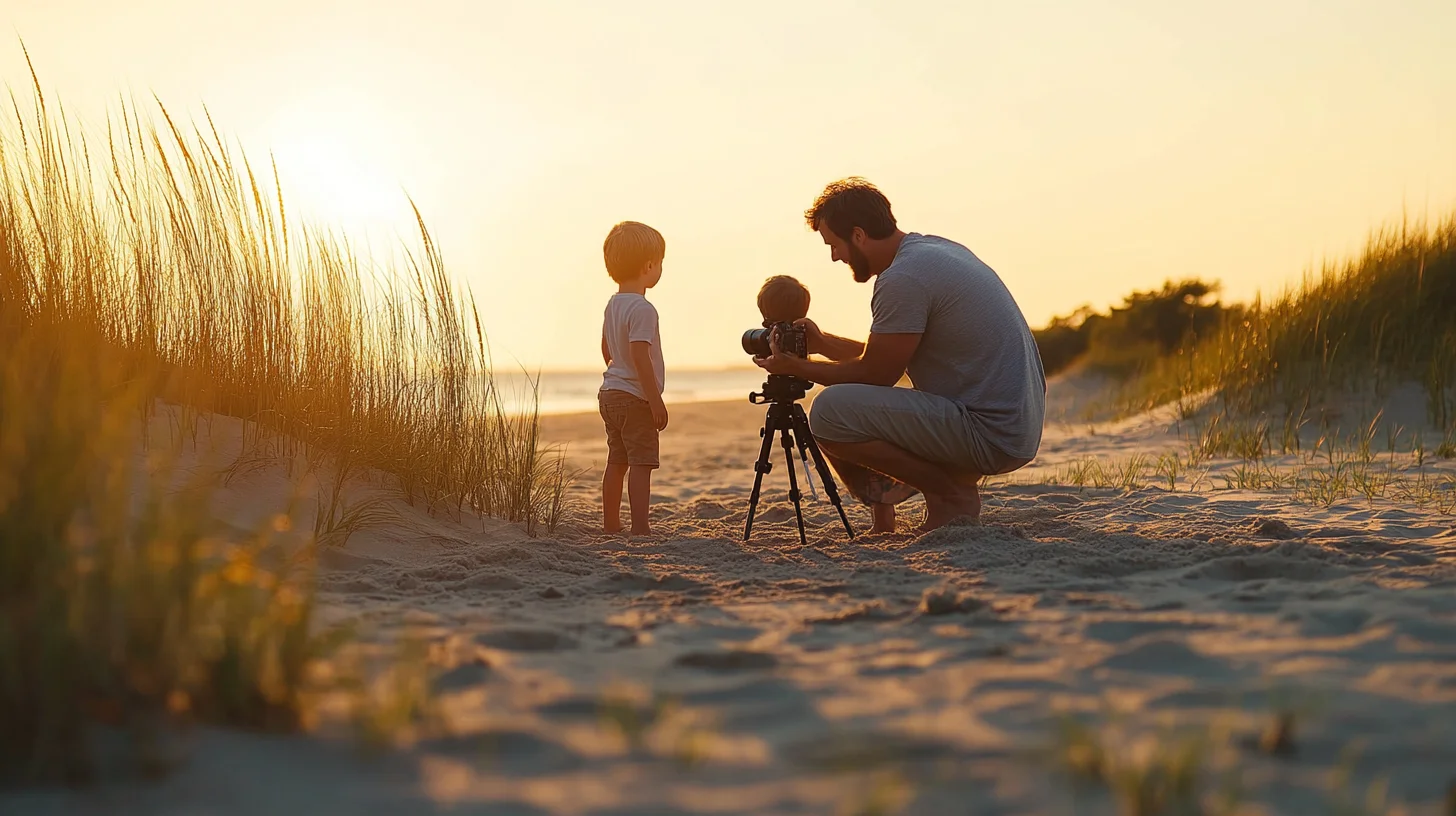
South Shore Photography, based in Rockland, MA, serves clients across Hingham, Scituate, Norwell, Duxbury, Marshfield, Cohasset, Hanover, Weymouth, and Plymouth. Photographer Chris McCarthy answers the most common beginner questions he hears every week from first-time portrait clients — covering pricing, booking, how to prepare, and exactly what to expect when you show up for your session.
I want to be honest about something: booking your first professional portrait session can feel genuinely intimidating. Most people have never hired a photographer before. They don't know the vocabulary, they're not sure what's included, and they're quietly terrified of showing up and looking stiff and uncomfortable in photos they'll be sharing for years. Every week I get consultations from first-time clients who apologize for asking “dumb questions” — and every time I tell them the same thing: there are no dumb questions here, only questions I should have answered before you had to ask. There are eight or ten questions that come up in nearly every first consultation. I've collected the most common ones here and answered them as honestly as I can, so you can decide whether booking a session is right for you — with no pressure from me either way.
Why First-Time Portrait Clients Feel Overwhelmed
The photography industry has essentially zero standardization, and that creates real confusion for first-time clients. Every photographer prices differently, packages deliverables differently, and uses different terminology. One photographer's “session fee” covers everything; another's is a sitting fee that doesn't include a single image. One photographer delivers a hundred photos in two weeks; another delivers fifteen in six. There's no universal industry standard that tells you what to expect, which means you're essentially starting from scratch every time you look at a new photographer's pricing page.
Most people have also only ever taken iPhone photos, so they've never had to think about concepts like session length, edited vs. unedited files, print rights, or gallery delivery. The vocabulary of professional photography feels foreign, and it can make a straightforward process feel more complicated than it actually is. When I talk to clients who've done a little research online, I often find they've confused themselves more rather than less — because they've read five different photographers' pricing pages and found five different approaches.
Pinterest and Instagram don't help either. Both platforms surface the absolute best work from photographers all over the world, curated and optimized for visual impact. When first-time clients come to a consultation with a Pinterest board full of images they love, they're often working from a visual reference pool that represents the top fraction of a percent of portrait photography globally. That's not a realistic benchmark for what any single local photographer produces on a Tuesday evening in October. I always welcome those Pinterest boards — they're useful for understanding style preferences — but I also want to set honest expectations about what's achievable in a real session.
How Much Does a Portrait Session Actually Cost?
I'll give you the straight answer, starting with my own pricing: South Shore Photography studio sessions start at $395 and on-location sessions start at $495. Most clients end up somewhere between $500 and $1,200 depending on session length, the number of edited images included, and whether they add prints or albums. That range is consistent with what you'll find across established portrait photographers on the South Shore — the wider local market typically runs from about $400 on the low end to $1,500 or more for longer or more elaborate sessions.
Why does pricing vary so much between photographers? A lot of it comes down to things that aren't visible in the final images: years of experience and the investment required to build that skill, the time spent on post-processing and retouching after the session (often equal to or longer than the session itself), professional equipment and its maintenance, liability insurance, and the overhead of running a legitimate business. A photographer charging $150 for a session has to cut somewhere — and it's usually in retouching time, customer support, or equipment quality. That doesn't always produce a bad experience, but it often does.
My honest advice: be skeptical of sub-$200 deals, especially when they advertise “all the photos on a USB drive.” Unedited files dumped to a drive is not the same as a professionally delivered portrait session. It means you're getting raw captures — some in focus, some not, most requiring significant color correction — with no curation and no support afterward. Budget accordingly, ask exactly what's included before you book, and read the fine print about how many edited images are delivered and in what format.
How Do I Choose the Right Photographer for Me?
Look at full galleries, not just Instagram highlights. A photographer's Instagram feed is curated — it shows their twenty best images from the last six months. What you actually want to see is a complete gallery from a single session: the variety of setups, how they handle different lighting conditions, how consistent the quality is across the whole shoot. Ask any photographer you're seriously considering to show you a complete recent gallery. If they're reluctant, that tells you something.
Check that the photographer specializes in your session type. A photographer who does primarily weddings and occasionally takes family sessions is a different thing from a photographer whose entire business is built around portrait work. Same for headshots, seniors, newborns, and every other specialty. Specialization matters because it shapes how a photographer approaches lighting, posing, location selection, and client communication. Someone who photographs fifty families a year will handle your session differently — and usually better — than someone who photographs five.
Read recent reviews and pay attention to the specifics: clients mentioning that the photographer was “patient with my kids,” “made me feel comfortable right away,” or “delivered exactly what they promised” are more useful signals than generic five-star praise. You can also learn a lot from how a photographer handles the inquiry process itself — do they respond promptly, answer your questions fully, and treat your question-asking as welcome rather than burdensome? That communication style usually predicts the session experience. For a deeper look at how to evaluate your options before booking, I walk through the full checklist in how to choose a portrait photographer on the South Shore.
Finally, trust personality fit. You're going to spend an hour or more with this person in a situation that requires some vulnerability — standing in front of a camera while someone evaluates how you look. If you feel uncomfortable during the consultation call, or if their communication style feels off, that feeling is not going to disappear on session day. Book with someone whose personality puts you at ease. The best technical photographer in the region won't produce great images of you if you spend the whole session tense.
What Should I Wear, and What Do I Bring?
The most important clothing principle: coordinate your palette rather than matching exactly. Families in identical outfits look stiff and overly staged. Instead, choose two or three colors that work together — navy and cream and dusty rose, or forest green and camel and white — and let everyone dress within that palette in different pieces. Avoid large busy patterns, bright logos, and anything with text across the chest; they compete with faces in photographs and date the images quickly. Solid colors and subtle textures almost always work better.
For outdoor sessions on the South Shore, plan for New England weather being unpredictable. A session at Duxbury Beach in late April can go from warm and sunny to cold and windy in twenty minutes. Bringing a light jacket that complements your outfit — rather than a neon windbreaker you grabbed from the back of the car — means you can stay comfortable without ruining your photos. I always recommend bringing one complete backup outfit to outdoor sessions, particularly for younger kids who are statistically guaranteed to find mud, water, or ice cream between the car and the session location.
For kids specifically: pack snacks and time your session after nap time, not before. A well-fed, well-rested four-year-old in a comfortable outfit is a completely different subject than a hungry, overtired four-year-old in dress shoes that pinch. Studio sessions make backup outfits easy — there's a changing area and no weather to contend with. I send every client a detailed styling guide before their session, so you'll never arrive wondering if you made the right call on what to wear.
Studio or Outdoor — Which Is Right for Me?
Both have real advantages, and the right choice depends entirely on what you're photographing and what you want the images to feel like. Studio sessions — shot at my Rockland, MA location — give you controlled, consistent light regardless of weather, a clean and distraction-free backdrop, and a predictable environment that's particularly valuable for headshots, personal branding, and indoor maternity portraits. If your goal is professional imagery for LinkedIn, a headshot for your company website, or polished indoor portraits that feel timeless rather than place-specific, studio is usually the better call.
Outdoor sessions draw on the genuine beauty of the South Shore landscape — World's End in Hingham, Scituate Harbor, Duxbury Beach, the North River corridor in Norwell and Marshfield, the conservation fields in Cohasset. For family sessions, senior portraits, engagement shoots, and lifestyle maternity sessions, an outdoor location adds context and character that a studio backdrop simply cannot replicate. There is something about a family laughing on a salt marsh trail in October or a high school senior standing at the Scituate lighthouse at golden hour that anchors the images to a real place and time in a way that genuinely matters twenty years later.
Some clients want both — and that's where hybrid sessions come in. Starting in the studio for polished headshot-style portraits and then moving to a nearby outdoor location for more relaxed, environmental images gives you the widest possible range from a single session. It works particularly well for personal branding clients who need both a professional headshot and lifestyle images for their website or social media.
How Long Is the Session and When Do I Get My Photos?
Session length varies by type. Headshot sessions run about 30 minutes — enough time for two or three wardrobe changes and multiple setups, which is typically all a single headshot client needs. Family and senior portrait sessions run 60 to 75 minutes, giving us time to explore a location, try different configurations, let kids warm up and settle in, and capture a real variety of images. Branding sessions run 90 to 120 minutes, since the goal is usually a full library of images covering multiple outfits, locations, and use cases.
On the delivery side: expect sneak-peek previews within about a week of your session and a full edited gallery within two weeks. “Edited” means professional color correction, exposure adjustments, and skin-tone retouching — it does not mean heavy digital manipulation, face-swapping, or AI-generated alterations. I'm creating portraits that look like you at your best, not a different person. The full gallery is delivered via an online platform where you can download images, share with family, and order prints directly.
If you have a hard deadline — a school yearbook submission, an upcoming job application, a gift that needs to be ordered — tell me at booking, not afterward. I can usually prioritize rush turnaround for clients with real deadlines, often at no extra cost if I know about it in advance. The clients who mention it two days before the gallery is due are the ones who end up paying rush fees; the ones who mention it at booking almost never do.
How Far in Advance Should I Book?
It depends on the session type and the season. Senior portrait sessions in fall fill two to three months out — if you want an October senior session, I'd reach out in July or August. Weekend family sessions in fall and spring fill four to six weeks out, sometimes faster for desirable golden hour slots during peak foliage. Weekday studio headshot sessions can often book within a week, since demand is more flexible during business hours. If you're planning a holiday card session — one of the most popular reasons to book in October — aim to reach out in September, and ideally late August.
The booking process itself is simple. You reach out via email or the contact form, we confirm the session type and check availability, you pay a retainer to lock in your date and sign a brief session agreement, and then I send you a session prep email with everything you need to know before we meet. There's no in-person meeting required before the session unless you want one. Most clients book entirely by email and then meet me for the first time at the session location.
One thing I always tell first-timers: reach out before you have every detail figured out. You don't need to know your exact location or exact outfit or exact number of people before you inquire. All of that gets sorted after you have a date secured. The clients who wait until they have every question answered before reaching out are often the ones who find out the date they wanted booked three weeks ago.
Frequently Asked Questions
Do I need to know how to pose for a portrait session?
No — posing you is my job, not yours. I give clear, gentle direction throughout every session: where to stand, where to look, how to hold your hands, how to interact with your family members. Most first-time clients tell me afterward that they expected it to feel awkward and were genuinely surprised by how natural it actually felt. You don't need to practice poses in the mirror beforehand. Just show up.
How much should I expect to spend on a portrait session on the South Shore?
South Shore Photography studio sessions start at $395 and on-location sessions start at $495, with most packages landing between $500 and $1,200 depending on session length, number of edited images, and any prints or albums you add. The wider South Shore market runs from about $400 on the low end to $1,500 or more for more elaborate sessions. I'd steer first-time clients away from sub-$200 deals — they almost always come with hidden costs or unedited delivery that leaves you doing the work yourself.
What if I'm really uncomfortable in front of the camera?
That's probably the single most common thing I hear at consultations, and it is completely normal. My approach is to keep sessions conversational, give you small concrete things to do with your hands and feet, and shoot through the moments between “poses” where people are usually at their most natural. By the second or third setup, almost everyone has settled in. If you're extremely nervous, a 30-minute mini session is a genuinely low-pressure way to test the waters before committing to a longer session.
What happens if it rains on the day of my outdoor session?
We reschedule, with no penalty. New England weather is unpredictable, and I'd rather move your session by a few days than capture cold, wet, miserable photos. I monitor the forecast for 48 hours leading up to every outdoor session and reach out the day before if it's looking iffy. Most rain reschedules find a new date within the same week, and clients with flexible schedules almost never wait more than a few days.
How long until I get my photos back after the session?
I deliver a full edited online gallery within two weeks of your session, with sneak-peek previews usually going out within the first week. “Edited” means professional color correction, exposure adjustments, and skin-tone retouching — not heavy AI manipulation or face-swapping. If you have a hard deadline for a school yearbook, an application, or a gift, let me know at booking and I'll prioritize your turnaround accordingly, often at no extra cost.
PRO TIP
“The clients who get the most out of a first portrait session aren't the ones who arrive with a Pinterest board and a pose list — they're the ones who show up rested, comfortable in what they're wearing, and willing to trust the process. The rest is my job.”
Ready to Book Your First Portrait Session?
If you've still got questions, I'd love to chat — there's no pressure and no sales pitch. Reach out and let's figure out if a South Shore portrait session is the right fit.

ABOUT THE AUTHOR
Chris McCarthy is a portrait photographer based in Rockland, MA who has been photographing the South Shore full-time since opening his studio in 2014 — more than a decade of outdoor and lifestyle portrait work across the region. He specializes in headshots, senior portraits, branding, family, and maternity photography — shooting at his studio at 83 E Water Street and on-location throughout southeastern Massachusetts at places like World's End, Scituate Harbor, Duxbury Beach, and the North River conservation land in Norwell.
More from the Blog
PILLAR GUIDE
South Shore Photography Basics — Complete Pillar
Beginner-friendly fundamentals: exposure, composition, light, focal length →
PHOTOGRAPHER GUIDE
How to Choose a Portrait Photographer on the South Shore
A practical checklist for vetting portrait photographers — galleries, reviews, communication, and trust.
BOOKING GUIDE
How to Book a Portrait Session on the South Shore
Step-by-step walkthrough of how to inquire, lock in your date, and prepare for session day.