EVENT PHOTOGRAPHY · PLANNING GUIDE
Event Photography on the South Shore: What's Included and How to Book
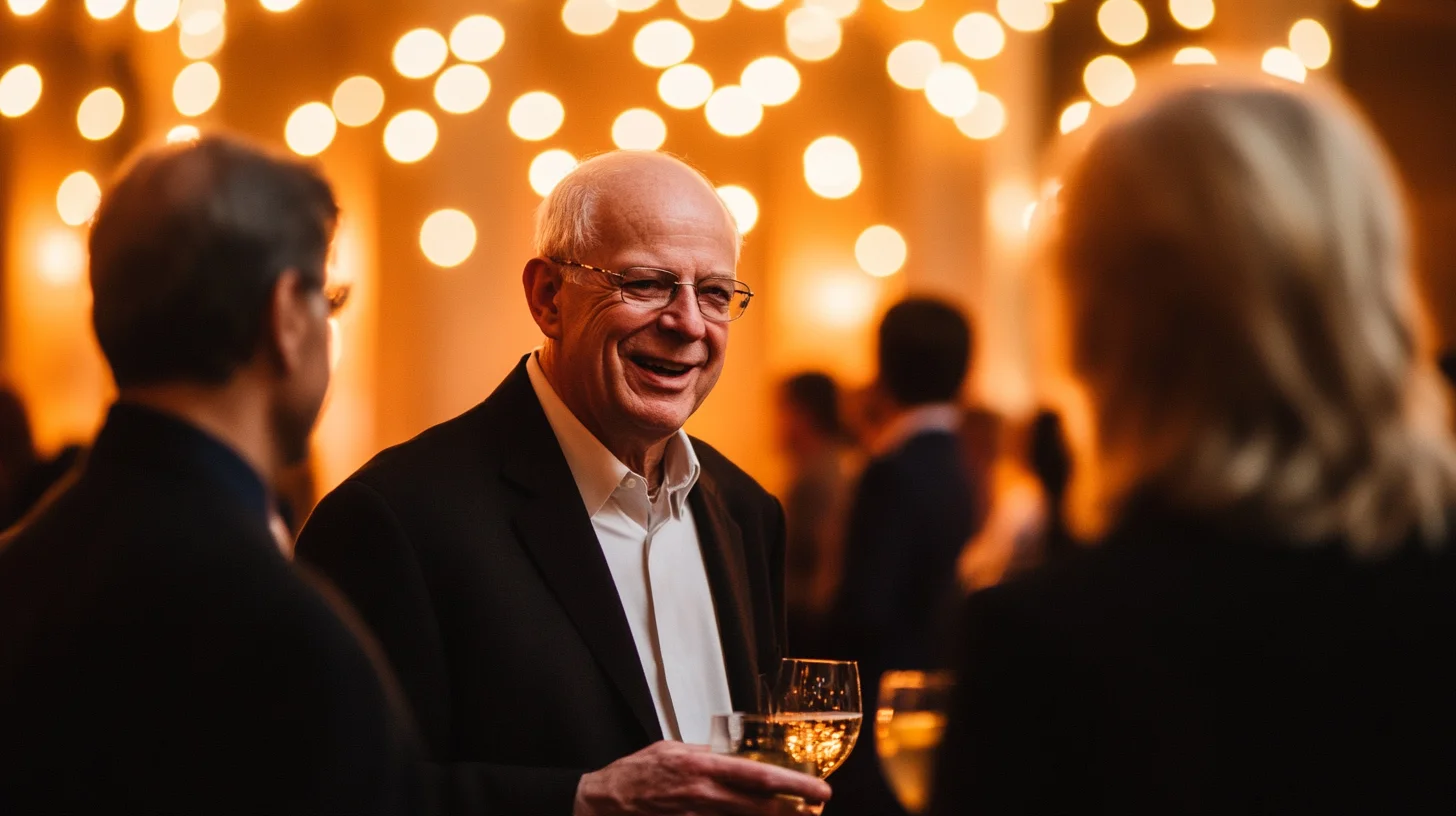
South Shore Photography, based in Rockland, MA, covers corporate and private events across Plymouth County and the greater South Shore — from Quincy to Plymouth, including Hingham, Scituate, Norwell, Duxbury, and Marshfield. Photographer Chris McCarthy has covered milestone corporate celebrations, nonprofit galas, and private milestone parties throughout the region.
Event photography is one of the most misunderstood services in photography. Clients often come to the conversation with assumptions formed by wedding photography, portrait photography, or stock photo browsing — none of which quite maps onto what professional event coverage actually is. I've had clients expect posed portrait sessions for 200 guests. I've had clients assume they'd receive every frame I captured. I've had clients unsure whether they even need a professional, wondering if a colleague with a good phone might suffice. This guide is an attempt to demystify it: what event photography actually covers, what you receive, how the process works from first contact to final delivery, and what distinguishes professional event coverage from having a friend take pictures.
What Types of Events I Cover on the South Shore
Corporate events make up a significant portion of my event work. Company milestone celebrations, product launches, team retreats, award ceremonies, conference sessions, and executive events all fall within this category. For corporate clients, I work across Plymouth County and the greater South Shore, with venues ranging from Plymouth waterfront properties to Quincy conference centers. Corporate clients typically need documentation that serves a dual purpose: internal communication and external marketing. I keep both uses in mind throughout the event.
Private milestone events are the other major category. Milestone birthday parties — 30th, 40th, 50th, and beyond — anniversary celebrations, graduation parties, and family reunions make up the bulk of this work. These events often carry the same emotional weight as weddings. They're marking significant life transitions, gathering people who may rarely be in the same room together, and creating memories that will be referenced for decades. They deserve the same professional approach that weight implies.
Community and nonprofit events round out my event work. Fundraising galas, community celebrations, and nonprofit milestone events serve a public function that adds complexity to the documentation — images need to work for press releases, social media, donor communications, and annual reports simultaneously. I work with a range of community organizations across the South Shore and understand what each of these use cases requires from the photography.
What I don't cover: weddings. Wedding photography is its own distinct and demanding specialty with its own equipment requirements, team structure, and workflow. I refer wedding inquiries to colleagues who specialize exclusively in that area. My event work is focused on corporate, private milestone, and community events where I can deliver consistently excellent results.
What Event Photography Actually Includes
Coverage hours are the foundation of event photography pricing. Most events are covered on a per-hour basis with a minimum of two hours. A corporate cocktail reception might need two to three hours. A full milestone birthday party with dinner, toasts, and dancing might need four to six hours. I discuss the event timeline with every client before booking and recommend a coverage window that captures all the key moments without unnecessary padding. My goal is to give you an honest assessment of what your event actually requires — not to maximize hours.
What I capture during an event: arrivals and atmosphere — people gathering, the venue before the crowd arrives, establishing shots that set the scene. Candid moments throughout the event — conversations, reactions, unguarded expressions, the texture of how people interact. Key formal moments — speeches, award presentations, cake cutting, toasts, ribbon cuttings. Group photos if requested and scheduled. And throughout all of it, the authentic feel of the event as it actually happened, not a sanitized version of it.
What I don't do: pose every guest for individual portraits (that's portrait photography, and it would bring your event to a standstill). Manage or direct event flow — I work with your event's existing structure and timeline, not against it. Make the event happen — I document what's there, and the quality of the documentation is proportional to the quality of the event itself. A well-organized event with genuine moments produces better photography than a chaotic one. I can't manufacture authenticity that isn't present.
Deliverables: professionally edited photographs in high-resolution digital format, delivered via private online gallery. No prints are included in standard packages, though print packages are available separately. Gallery access is typically provided within two weeks of the event. The gallery link can be shared with colleagues, guests, or family members as needed, and all images are downloadable in full resolution.
The Booking Process Step by Step
Step 1 — Initial contact. Reach out via the contact form or by phone with the event date, type, location, and estimated guest count. I'll confirm availability and schedule a brief call to discuss the event in more detail. This first step takes five minutes and locks in your date inquiry — it doesn't commit you to anything.
Step 2 — Consultation call. A 20 to 30 minute conversation covering the event timeline, the key moments you want captured, the venue and its lighting conditions, any specific shots that are important to you, and logistical considerations like restricted areas, parking, and dress code for the photographer. This call is where I get the picture — not just the schedule, but the feel of what you're trying to document and why it matters.
Step 3 — Proposal and contract. I send a written proposal with coverage hours, package details, and pricing. Once approved, a simple contract is signed and a deposit — typically 50% — is collected to hold the date. The contract spells out exactly what is covered, what the deliverables are, and the timeline for delivery.
Step 4 — Pre-event coordination. The week before the event, I reach out to confirm details — the final timeline, any changes since we last spoke, venue contact information, and parking logistics. For larger events, I may schedule a venue walk-through to understand the space before the day of. Surprises on event day are avoidable — pre-event communication eliminates most of them.
Step 5 — Event coverage. I arrive 20 to 30 minutes before coverage begins, orient to the space and its lighting, identify the key vantage points for the planned moments, and get in position before guests start arriving. I work unobtrusively throughout the event, moving through the space without disrupting the natural flow. Most guests won't notice I'm there until they see the photos.
Step 6 — Editing and delivery. Within two weeks of the event, the edited gallery is delivered via a private online link. Clients can download all images in high resolution and share the gallery link with others. The gallery stays active for 90 days by default, with extended access available on request.
What Good Event Photography Actually Requires
Anticipation is the core skill. Anyone with a camera can photograph what happened after it happened. Professional event photographers are positioned for what's about to happen — the speaker who's about to make the key point, the executive who's about to shake the hand, the guest whose expression is about to shift into something real. That positioning comes from reading the room constantly, understanding event rhythms, and trusting instincts built over hundreds of events. It cannot be faked and it cannot be replicated by someone pointing a camera and hoping for the best.
Unobtrusive movement is what separates documentation from disruption. A good event photographer is nearly invisible. Guests shouldn't feel followed or photographed — they should simply be at the event, and later be surprised by how well their experience was captured. The candid moments that give event galleries their authenticity come from a photographer who knows how to move through a room without becoming part of it. That skill is learned, not assumed.
Technical competence in difficult conditions matters more at events than almost anywhere else in photography. Events happen in challenging light — dark reception halls, mixed indoor and outdoor settings, backlit stages where the speaker is silhouetted, fluorescent conference rooms that cast unflattering color. Professional event photography requires equipment and technique that handles these conditions reliably, without the images telegraphing that they were difficult to make.
People skills are the aspect of event photography that gets underestimated most often. The brief interactions between a photographer and event guests either produce cooperation or resistance. Reading body language, knowing when to ask for a quick group photo and when to step back, making subjects feel seen rather than intruded upon — this is the interpersonal dimension of event photography that experience teaches and that no amount of technical gear substitutes for.
What to Expect from Your Event Gallery
Volume. A four-hour event typically produces 200 to 400 delivered images after editing. Not every photograph from the night — I capture thousands of frames over the course of an event and edit down to the strongest selection. Clients receive the images that are well-exposed, well-composed, and that capture genuine moments worth keeping. More is not always better: a gallery of 150 excellent images is more useful than a gallery of 800 mediocre ones.
Editing style. I edit for natural, warm, documentary color — not heavily processed or stylized. The goal is photographs that look like what happened, in good light, with flattering treatment of skin tones and expressions. Corporate clients can use these images directly in communications without them looking overly stylized or artistic. Private clients receive images that feel real rather than artificially enhanced.
Turnaround time. Two weeks is standard. For events with tight deadlines — a company that needs images for a Monday press release from a Friday evening event, or a nonprofit that needs photos for a donor communication going out the following week — rush turnaround is available for an additional fee. This should be discussed during the booking process, not requested after the event.
Frequently Asked Questions
What types of events do you photograph on the South Shore?
Corporate events (company milestones, product launches, team celebrations, award ceremonies), private events (milestone birthdays from 30th through 50th and beyond, anniversary parties, graduation celebrations, family reunions), and community and nonprofit events. I don't photograph weddings, which I refer to colleagues who specialize in that specific area.
How far in advance should I book an event photographer?
For corporate events, 4-8 weeks in advance is ideal — though I can sometimes accommodate shorter lead times for smaller events. For milestone birthday parties and private events, 4-6 weeks is a good window. Very large events or events on popular dates (holidays, graduation weekends) benefit from 2-3 months' advance booking.
How many photos will I receive from my event?
A 4-hour event typically produces 200-400 delivered images after professional editing. The exact number depends on the pace of the event and how much is happening — a dense conference schedule produces more images than a relaxed cocktail reception. I edit for quality over quantity: you receive the images that are technically strong and capture genuine moments.
How long does it take to receive event photos?
Standard delivery is within 2 weeks of the event via a private online gallery. Rush delivery (within 3-5 business days) is available for an additional fee — this is useful for corporate events where photos are needed for marketing or internal communications shortly after the event.
Do you travel outside Rockland for event photography?
Yes — I cover events throughout the South Shore from Quincy to Plymouth, including venues in Hingham, Scituate, Norwell, Duxbury, Marshfield, and surrounding areas. For events further afield, travel fees apply. Reach out with your event location and I'll confirm coverage and any applicable travel costs.
PRO TIP
“The single most valuable thing a client can give me before an event is a timeline with the three to five moments that matter most. When I know that the award presentation is happening at 7:45, the CEO toast at 8:30, and the family photos at 9:00, I can position for those moments rather than discovering them as they happen.”
Book Event Photography on the South Shore
Corporate events, milestone celebrations, and community gatherings across Hingham, Scituate, Norwell, Plymouth, and beyond.

ABOUT THE AUTHOR
Chris McCarthy is a portrait photographer based in Rockland, MA who has been photographing the South Shore full-time since opening his studio in 2014 — more than a decade of outdoor and lifestyle portrait work across the region. He specializes in headshots, senior portraits, branding, family, and maternity photography — shooting at his studio at 83 E Water Street and on-location throughout southeastern Massachusetts at places like World's End, Scituate Harbor, Duxbury Beach, and the North River conservation land in Norwell.
More from the Blog
BIRTHDAY IDEAS
Outdoor Birthday Photoshoot Ideas — South Shore
Specific outdoor birthday session ideas for every age — pairs naturally with party-event coverage.
EVENT PHOTOGRAPHY
How a South Shore Event Photographer Captures What Matters
The approach, instincts, and technique behind professional event documentation that goes beyond pointing a camera.
BRANDING PHOTOGRAPHY
Why South Shore Small Businesses Need Professional Branding Photography
How professional imagery transforms the way potential clients perceive your business before they ever speak to you.