FAMILY PORTRAITS · EXTENDED FAMILY
Multigenerational Family Portrait Guide for the South Shore
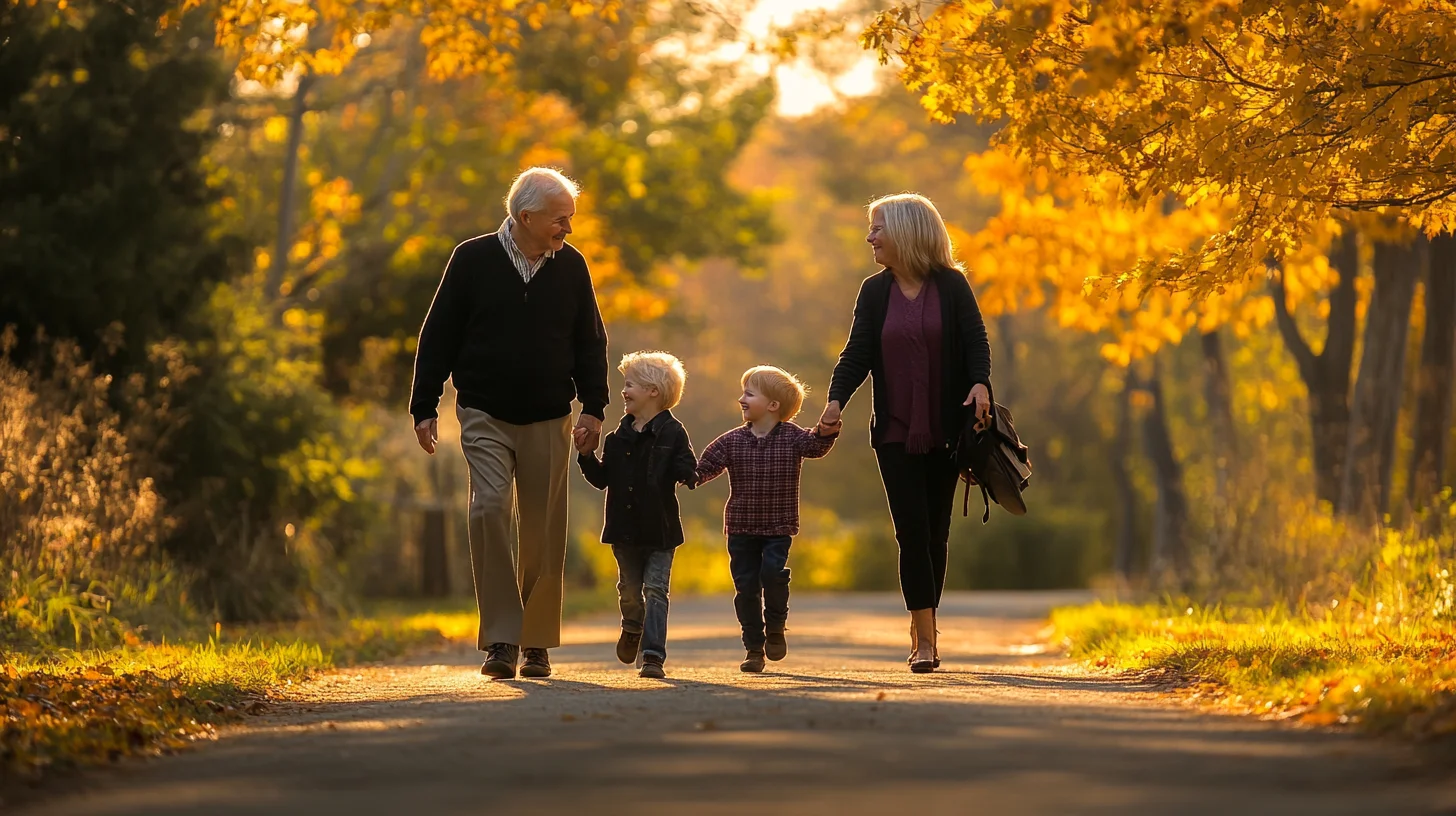
South Shore Photography, based in Rockland, MA, serves families across Hingham, Scituate, Norwell, Duxbury, Marshfield, Cohasset, Hanover, Weymouth, and Plymouth. Photographer Chris McCarthy has been documenting extended families and multigenerational gatherings across the South Shore for years — here is the complete guide he shares with every family planning one of these sessions.
Of all the portrait sessions I photograph, multigenerational family sessions are the ones that produce the most meaningful images — and also require the most advance planning. Getting three generations in one place at one time, coordinating outfits across 15 or 20 people, choosing a location accessible to both toddlers and grandparents, managing the inevitable logistics of a large group — it sounds complicated. It is complicated. But when it comes together, the resulting images are unlike anything else I produce. They become heirlooms. They get printed large and hung in living rooms. They are the photographs families will still be looking at in 40 years. That is worth every logistical challenge, and this guide exists to make those challenges manageable.
Why Multigenerational Portraits Matter More Than You Think
I want to say something directly, because I think it gets lost in the logistics of planning: these three generations will not always be together. The grandparents who are healthy and mobile today may not be in five years. The grandchildren who are small enough to be scooped up into grandpa's arms will be teenagers before you know it. The window for capturing a grandparent holding an infant grandchild, or a grandmother and her adult children gathered on a beach, is narrower than any of us want to admit.
I have photographed sessions where a grandparent passed away within months of the shoot. Those families message me years later to say that photograph — the one they almost didn't book because it felt like a lot of coordination — is the most treasured thing they own. Not the individual family portraits, not the baby photos, not the senior portraits. The one where everyone is together.
There is also something uniquely powerful about the visual record of lineage. When you see four generations arranged together — great-grandparent, grandparent, parent, child — the family resemblance across decades becomes visible in a way that everyday life never reveals. The same jawline appearing in four different faces. The grandmother's eyes in her granddaughter. These images do something that no individual portrait can do: they show a family as a living, continuous thing rather than a collection of separate people.
When families ask me what type of session to prioritize, my answer is always this one. Individual and nuclear family portraits are wonderful and I will always encourage them. But if your extended family is gathering — for a reunion, a milestone birthday, a holiday, any reason at all — please do not let that moment go undocumented. The images from that session will outlast everything else in your portfolio.
Best South Shore Locations for Large Family Groups
Location selection for multigenerational sessions is more constrained than for standard family sessions, because the needs of the group are broader. You need space for 15 or 20 people to stand comfortably. You need flat, accessible terrain for grandparents who may have mobility limitations. You need shade options for a two-hour session in warmer months. And ideally, you want scenery that is distinctly South Shore — something that will place these images geographically when the family looks at them decades from now.
World's End, Hingham. This is my most-used location for large family sessions, and for good reason. The Olmsted-designed carriage roads are wide, smooth, and flat — well-suited to anyone using a cane or walker. The tree canopy along the main path provides natural shade even in summer. The views of Boston Harbor in the background give group shots a dramatic sense of place. Parking is close to the main paths, which minimizes the walk for family members with mobility concerns. The one limitation is the entrance fee, which is worth building into the session budget.
Webb Memorial State Park, Weymouth. This is an underused gem that I find myself recommending more and more for accessible waterfront sessions. The paths are paved and flat, the waterfront views are genuinely beautiful, and there is ample open space for large group compositions. Parking is straightforward and close to the main shooting areas. For families with elderly members who cannot do uneven terrain, Webb Memorial is often the right answer.
Duxbury Beach boardwalk area. For families who want that classic New England beach backdrop with their extended group, the boardwalk area at Duxbury Beach offers flat, open access without requiring a long walk across loose sand. The scale of the dunes and open water creates compositions that work beautifully for large groups, and the light over the water in the late afternoon is exceptional. This is a stronger choice in the shoulder seasons — late spring and early fall — when the beach is less crowded.
Bare Cove Park, Hingham. This conservation area offers wide, well-maintained trails along the water with a combination of open meadow and wooded settings. It is less well-known than World's End but often less crowded, which matters when you are trying to organize a large group. The varied terrain — some open fields, some tree-lined paths — gives us options to shift between settings within a single session.
In all cases, when booking a multigenerational session, I specifically ask about the mobility of every family member who will be present. The last thing I want is to arrive at a beautiful location only to discover that grandma cannot navigate the path to the shooting area. A brief conversation about accessibility before the session prevents that situation entirely.
Coordinating Outfits for 10+ People
Outfit coordination for large family groups is one of the most anxiety-producing parts of planning, and I understand why. When you are coordinating wardrobes across three households, multiple age groups, and different body types, the temptation is either to over-control (everyone wears exactly the same thing) or to under-control (everyone wears whatever they want). Both produce bad results. The right approach is coordinated freedom — a shared palette, not a uniform.
Here is the framework I recommend: choose three or four colors that form a cohesive palette, then assign a primary color to each nuclear family unit within the extended group. Each family unit wears their assigned color as their dominant tone but can incorporate neutrals freely. The result is a group that reads as unified from a distance — the eye sees a coherent palette — but up close, individuals have distinct looks that suit their personalities and body types.
For South Shore outdoor sessions, my go-to palette suggestions are: navy, cream, sage green, and dusty rose (works beautifully in any season against coastal and park backgrounds); burgundy, camel, forest green, and soft white (excellent for fall sessions against foliage); or chambray blue, ivory, warm tan, and muted coral (ideal for spring and summer beach sessions).
Practical rules that matter at scale: avoid bright white entirely (it blows out in outdoor light and is nearly impossible to expose correctly across a large group), skip large busy patterns (they create visual noise that fights the group composition), and make sure children's outfits allow free movement. A toddler in a stiff formal outfit will be unhappy within ten minutes, and that unhappiness will appear in every photograph. Comfort at every age produces better images than formality at any age.
I also recommend appointing one family member as the “outfit coordinator” — someone who collects photos from each household before the session to check that everything works together. What looks coordinated in isolation sometimes clashes when you see the full group assembled. A quick group text with outfit photos a week before the session catches those problems before they become problems on the day.
Session Flow for Multi-Gen Sessions
The order in which I photograph different groupings during a multigenerational session is not arbitrary — it is carefully planned to work with the natural energy curve of a large group rather than against it. Always start with the full group when energy is highest.
Here is the typical flow I use for a 90-minute to two-hour extended family session:
Full group first (20–25 minutes). Everyone is fresh, the grandparents have not yet been standing for an hour, and the children have not yet burned through their patience. I get the full group in multiple configurations — formal arrangement, candid interaction, walking together — while the collective energy is at its peak. This is also the most logistically complex part of the session, and having it done early removes the pressure of trying to pull everyone back together after they have dispersed into smaller groups.
Nuclear family combinations (30–35 minutes). After the full group, I break into the individual family units — each set of parents with their children, photographed as a complete nuclear family. This is where I capture the family portrait content that each household will want for their own walls. Moving through these systematically keeps the session organized and ensures no family unit gets skipped.
Grandparent pairings (15–20 minutes). Some of the most meaningful images in a multigenerational session are the focused grandparent-and-grandchild combinations. Grandparents with all grandchildren together. Individual grandchild with each grandparent. The grandparents alone. These images have a different emotional register than the full group — more intimate, more focused on the specific relationship. I always make time for them.
Candid play time to close (15 minutes). After the structured setups are complete, I step back and let the family just exist together for a few minutes. Kids run, cousins play, adults laugh at something only they understand. These unscripted moments almost always produce images that families end up choosing for their wall prints. The formal setups are necessary. The candid close is where the magic lives.
Managing the Logistics
A multigenerational session has more moving logistical pieces than any other portrait session, and the families that navigate them most successfully are the ones who plan ahead rather than improvising on the day.
Time of day is a compound decision. For standard family sessions, I almost always recommend golden hour — late afternoon light is simply the most flattering. For multigenerational sessions, golden hour has a complication: it requires families with young children (who may be in bed by 7:30) and elderly family members (whose energy peaks in the morning) to both show up for a late-afternoon session. That tension is real. My recommendation for most extended family sessions is a mid-morning session, starting around 9 or 10 AM. The light is soft and directional, the grandparents are fresh, the young children are well-rested, and the afternoon nap schedule is not a factor.
Designate a family coordinator. For sessions with 15 or more people, I strongly recommend that the family appoint one person — typically the one who booked the session — as the coordinator for the day. This person is responsible for communicating the meeting time and location to everyone, gathering outfit photos for pre-session review, and keeping people together and attentive during the session itself. Having a single point of coordination dramatically reduces the time lost to herding, and time is precious during a two-hour session with a large group.
Plan parking logistics in advance. Multiple cars arriving at an unfamiliar location and trying to find each other eats into session time quickly. Share a specific parking location with directions before the day, designate a meeting spot within the park or location, and ask everyone to arrive 10 minutes before the scheduled session start time — which means building in a buffer of your own.
Bring a chair for grandparents. A folding chair or lightweight camp chair in the car is one of the most practical things a family can bring to an extended session. Grandparents standing for 90 minutes become uncomfortable, and discomfort shows in photographs. A seated grandparent between setups stays fresh and looks natural in many compositions — sitting is not less photogenic than standing, it is often more so.
Snacks matter, especially for young children. A toddler who has been walking around for 45 minutes without a snack is not a cooperative portrait subject. Small, non-messy snacks tucked in a bag — crackers, fruit pouches, whatever your child responds to — can reset a flagging toddler in three minutes. I keep sessions moving quickly for exactly this reason, but snacks are always a smart backup.
Working With Different Comfort Levels
In any group of 15 or 20 people, you will have a range of relationships with the camera. Some family members will be natural performers who relax immediately and love the whole process. Others will be deeply uncomfortable in front of a lens and will communicate that discomfort in every direction — stiff posture, forced smile, visible reluctance. Managing that range is one of the most important skills in multigenerational portrait work.
My approach with camera-shy individuals is to work around them rather than through them. I never single out a reluctant person or draw attention to their discomfort. Instead, I keep the energy of the session light, give clear and specific directions (which are easier to follow than vague ones), and create situations where natural interaction — not posing — is what I am photographing. A reluctant uncle who is genuinely laughing at something his niece said is infinitely more photogenic than a reluctant uncle trying to hold a smile.
The candid moments between formal setups almost always produce the most meaningful images in a multigenerational session, and those moments are actually easier to capture with camera-shy people, because those people are not trying to perform for the camera — they are just being themselves. I have found that the family members who protest most loudly about hating photographs often appear in the most beautiful candid images of the session. They are authentic in a way that enthusiastic performers sometimes are not.
It also helps to brief camera-shy family members before the session. A quick note from the family coordinator — “the photographer is really low-key, there's no pressure, most of it is just hanging out together” — reduces the pre-session anxiety that makes people stiffen up on arrival. Managing expectations before we start makes the session itself much smoother for everyone.
FREE GUIDE · PDF
Three generations, one guide
The free Family Session + Posing Guide includes poses for grandparents and grandkids, from the three-generation lineup to the grandparent hug.
Three-generation poses in the family guide →Frequently Asked Questions
How many people can you photograph at once for a multigenerational session?
I regularly photograph groups of 20 to 30 people for extended family sessions. The key is choosing a location with enough open space to arrange everyone comfortably and enough depth of field to keep the whole group in focus. For very large groups — 30 or more — I recommend a morning session at a wide-open location like Webb Memorial State Park in Weymouth or the open fields near Duxbury Beach, where there is ample room to spread out and I can use a wider composition.
How long should we book for a multigenerational family portrait session?
I recommend booking 90 minutes to two hours for extended family sessions. This allows time for the full group setup, multiple nuclear family combinations, grandparent-and-grandchild pairings, and some unscripted candid moments. Larger groups — 20 or more people — should plan on the full two hours. The additional time is not just about volume of setups; it accounts for the natural pace of gathering, re-positioning, and keeping everyone comfortable between shots.
What if grandparents have mobility limitations or cannot walk far?
Mobility considerations are one of the first things I discuss when planning a multigenerational session. I specifically choose locations with flat, paved, or firmly packed paths, close parking, and shade options. World's End in Hingham has wide, smooth carriage roads. Webb Memorial State Park in Weymouth has an accessible waterfront path that is ideal for anyone using a walker or cane. I also recommend bringing a folding chair for grandparents to use between setups — standing for 90 minutes is tiring for anyone, and a seated grandparent looks completely natural in many group compositions anyway.
Can we do different family groupings within a single session?
Absolutely — and I strongly encourage it. The full extended family group shot is important, but some of the most meaningful images come from smaller combinations: all the grandchildren together, each nuclear family unit separately, grandparents with their grandchildren, siblings with their families. I plan the session flow to move from largest group to smaller combinations, which keeps energy high and allows everyone to take breaks naturally. Most multigenerational sessions include five to eight distinct groupings within the two-hour window.
How do we coordinate outfits for a large extended family?
Do not try to match everyone — it looks forced and is nearly impossible to execute across different body types and ages. Instead, choose three or four colors that form a cohesive palette and assign a primary color to each nuclear family unit within the larger group. For South Shore outdoor sessions, I like palettes built around navy, cream, sage green, and dusty rose; or around burgundy, camel, forest green, and white. Each family wears their assigned anchor color but can mix in neutrals. The result is a coordinated group that reads as unified without looking like a catalog photo.
PRO TIP
“The images families treasure most from multigenerational sessions are rarely the perfectly arranged group shots — they are the small moments between them. Grandpa holding a grandchild's hand on the path. Cousins leaning together and whispering something. Three generations laughing at the same moment. I keep my camera ready between setups specifically for these. They are not accidents; they are the whole point.”
Book Your Extended Family Session
Multigenerational sessions book quickly — reach out now to check availability and start planning the session your family will look back on for decades.
PILLAR GUIDE
The Complete Guide to Family Portraits on the South Shore
This post focuses on multigenerational family portraits on the South Shore. For the full overview — every South Shore family portrait location, wardrobe by season, what to bring, and how to plan your session — read the complete pillar guide.
Read the complete family portraits guide →
ABOUT THE AUTHOR
Chris McCarthy is a portrait photographer based in Rockland, MA who has been photographing the South Shore full-time since opening his studio in 2014 — more than a decade of outdoor and lifestyle portrait work across the region. He specializes in headshots, senior portraits, branding, family, and maternity photography — shooting at his studio at 83 E Water Street and on-location throughout southeastern Massachusetts at places like World's End, Scituate Harbor, Duxbury Beach, and the North River conservation land in Norwell.
Sessions you might also book
Related portrait sessions on the South Shore — all booked through the same studio in Rockland, MA.
More from the Blog
LIFECYCLE
Engagement Photography — South Shore
Lifecycle bridge: many multigenerational portraits begin with an engagement session →
FIRST BIRTHDAY MILESTONE
Outdoor First Birthday Photoshoot Locations
First-birthday milestone session locations across the South Shore — works beautifully alongside multigenerational coverage.
FAMILY EVENTS
Family Reunion Photography on the South Shore
How to plan and photograph a family reunion across the South Shore.
STYLE GUIDE
What to Wear for Family Portraits on the South Shore
Complete styling guide for coordinating your family's outfits across all seasons.