SENIOR PORTRAITS · PROPS GUIDE
Senior Portrait Props That Actually Work
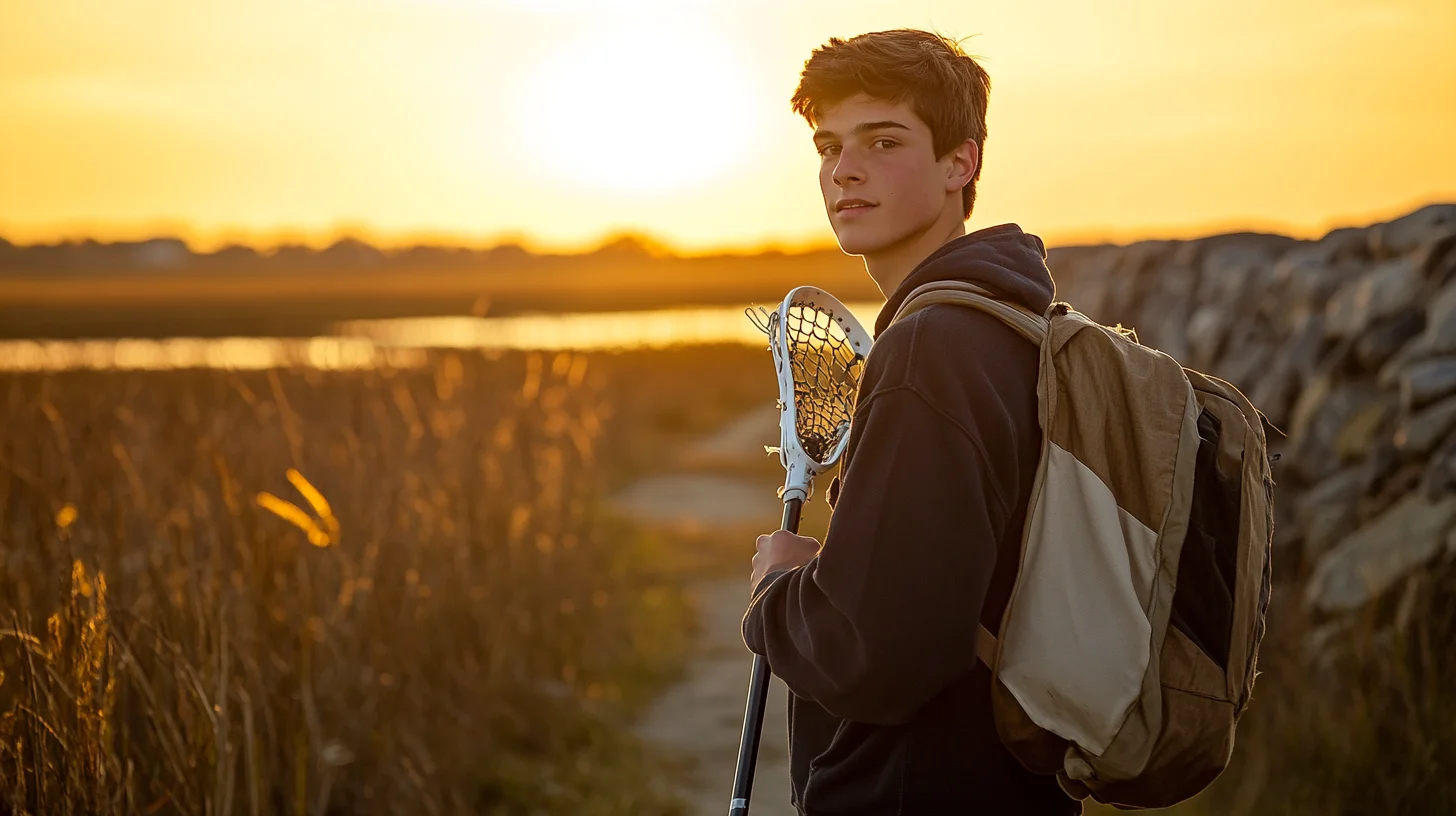
South Shore Photography serves high school seniors across Rockland, Hingham, Scituate, Norwell, Duxbury, Cohasset, Marshfield, Hanover, Weymouth, and Plymouth. This guide comes from photographer Chris McCarthy's actual session experience — what props show up, which ones earn their place in the frame, and which ones quietly undermine an otherwise great portrait.
A prop should make a senior portrait feel more like the senior, not less. The right object turns a photograph into a portrait of who someone actually is right now — specific, irreplaceable, tied to this chapter of their life. The wrong prop turns it into a costume. That distinction sounds obvious until you're standing in front of a camera wondering whether to bring the guitar you've played since fifth grade or the aesthetically pleasing vintage camera you found on Pinterest. One of those belongs in the session. One of them doesn't.
As a South Shore senior portrait photographer based in Rockland, I've shot sessions with varsity jackets, lacrosse sticks, hockey gear, instruments, classic cars, golden retrievers, robotics kits, ceramic mugs from a senior's first job. What every successful prop session had in common: the object meant something specific to that senior. Not a styled aesthetic, not a Pinterest reference — something they actually use, wear, or care about. This guide walks through what works, what doesn't, and which South Shore locations match which props. For the full planning resource, read the complete guide to senior portraits on the South Shore.
The Principle: Meaning Beats Aesthetic
A prop earns its spot in a senior portrait session when it answers one question: what would this senior grab if their parent told them to pick one thing for the photos? Not what looks good in a trending Instagram reel, not what a Pinterest board labeled “senior session inspo” showed in a flat-lay — what this specific senior would actually reach for.
The practical reason this matters: meaning ages well and aesthetic-only props don't. A lacrosse stick from a senior who has played since middle school reads as completely natural in 2026 and will still read as natural in 2036 when this senior shows these portraits to their own kids. A vintage typewriter selected because it looked moody on a mood board will look like a costume in eighteen months when that particular aesthetic cycle has moved on.
Compare: a pair of well-worn cleats the senior actually played a season in versus a generic wildflower bouquet assembled to add color to the frame. The cleats have a specific story — a specific season, specific games, specific mud from a specific field. The bouquet has no story at all. It's set dressing. Both can appear in a senior portrait, but only one of them makes the portrait irreplaceable rather than interchangeable. Similarly, an instrument the senior has played for four years versus a vintage record pulled out for the visual — one is evidence of a real life, one is borrowed atmosphere. In ten years the senior will know the difference, and so will everyone who looks at the photo.
Props That Work Almost Every Time
A varsity jacket or letter sweater. This is the single most universally successful senior portrait prop — it signals a whole era of a person's life in one garment, it's photogenic in virtually every light, and it works as both a primary outfit and a layering piece over a different look. School colors photograph particularly well at golden hour when warm light intensifies the saturation. For guidance on building outfits around a varsity jacket or other key pieces, see what to wear for senior portraits on the South Shore.
An instrument the senior actually plays. Guitar, violin, cello, trumpet, drums — any instrument works if the senior has a real relationship with it. I time shots during natural moments: tuning, adjusting the strap, mid-strum. These produce a completely different energy than a senior holding an instrument stiffly for the camera. The instrument's condition matters here — a worn, loved instrument tells a better story than a brand-new one brought out for the photos.
Sport-specific gear. Lacrosse stick, hockey stick and helmet, baseball glove, soccer ball, field hockey stick — any piece of sport equipment that the senior has actually used in competition photographs with an authenticity that purely aesthetic props can't replicate. The grip, the wear pattern, the way the senior holds it without thinking — all of that reads in the final image.
A pet — usually a dog, sometimes a horse. The senior's own dog is one of the most reliable props in any session. Dogs are naturally expressive, they create interaction and movement, and they ground the senior in a relationship that's visually compelling. I shoot these with plenty of patience — dogs do what dogs do — and the best frames almost always come from a spontaneous moment between the senior and the animal rather than any directed pose.
A senior's first car. When the car is actually theirs — a first car they saved for, a restored classic from a grandparent, a truck they drive to school every day — it becomes one of the most personal props available. The relationship between a teenager and their first car is loaded with meaning. That meaning shows.
Robotics team gear, theater costumes, art portfolio. These work because they represent an entire extracurricular identity — years of practice, specific skills, a community the senior belongs to. A robotics component, a script with handwritten notes, a portfolio of original artwork: each of these says something completely specific about who this senior is that no generic prop can replicate.
Books they actually read. Specific titles, not aesthetic stacks arranged by spine color. A senior who has a real relationship with a book — who has dog-eared pages, who keeps it on their nightstand — photographs completely differently than a senior holding a curated stack they pulled for visual balance. One specific meaningful book outperforms six attractive ones every time.
Hobby items: skateboard, surfboard, climbing harness, paintbrushes. Anything that represents how the senior spends their actual free time belongs in this category. A surfboard at Duxbury Beach or Nantasket photographed with a senior who actually surfs looks nothing like a surfboard rented for the aesthetic. The comfort a senior has with the object — how they carry it, where they rest it, how they interact with it without being directed — is what separates a meaningful prop from a borrowed one. For more creative approaches beyond props, browse the full list of senior picture ideas for the South Shore.
Props That Almost Never Work
Trendy aesthetic props. Typewriters the senior has never used, vinyl records from bands they don't actually listen to, Polaroid cameras borrowed for the visual — these are the most common prop mistakes I see in senior portrait planning. They appear in a session, they photograph reasonably well, and then five years later the senior looks at the portrait and thinks: “why do I have a typewriter?” Aesthetic trends cycle fast. Meaning does not.
Random florals as photoshoot decor. Flowers work when they mean something specific — a senior who gardens, a boutonniere from prom, flowers from a garden the senior planted. Flowers selected purely to add color or softness to the frame read as set dressing, not portraiture. If the senior would not naturally hold flowers in their daily life, they should not be holding flowers in their senior portrait.
Balloons. Unless it is literally a birthday photoshoot, balloons have no place in a senior portrait session. They are visual noise — they move unpredictably, they compete with the senior for attention, and they date the image immediately. I have never had a senior look back at a balloon photo and feel like the balloon added something.
Items borrowed from another senior's session for the look. A prop borrowed from a friend because it looked good in their photos carries none of the meaning that made it work in the original session. The senior's relationship with the object — or lack of one — shows in every frame.
Anything bought specifically for the photos. The pattern behind all of the above: anything that was not already part of the senior's life before the session was planned will look out of place in ten years. Props do not need to be expensive or impressive. They need to be real.
Sport-Specific Prop Guidance — Hingham, Norwell, Hanover, Scituate
Lacrosse. The Norwell High turf fields and Hingham High athletic complex both work beautifully for lacrosse prop shots. Bring the stick and gloves, wear the team helmet or team jersey if the senior has one. What to skip: full padding — it adds bulk to the frame and hides the senior's face and body under gear. The stick alone creates a strong diagonal compositional line and reads immediately.
Hockey. The Pilgrim Skating Arena in Plymouth and the South Shore Ice Arena in Bridgewater are accessible for rink-adjacent shots at the right times. For outdoor sessions, we use the helmet and stick against a neutral backdrop — a stone wall, a wooded path, an open field. Bringing full pads to an outdoor location creates a logistical burden and visual clutter; the helmet and stick alone are more photogenic and more portable.
Soccer. Hingham High fields and the open recreational fields throughout Norwell and Hanover all work well. A ball on the ground at the senior's feet, cleats in hand rather than on feet, or mid-kick action — all of these photograph well and feel genuine for a soccer player. Jersey plus cleats plus ball is a complete look that needs nothing else added to the frame.
Baseball and softball. Plymouth fields, the Marshfield High complex, and the Rockland High athletic fields are all accessible for baseball and softball prop sessions. Glove alone is the most versatile prop — it reads immediately and works in any light. A full uniform works too, but warrants a single dedicated look rather than mixing with other outfits in the session.
Field hockey. Marshfield High and Norwell High both have turf or grass fields accessible for field hockey prop shots. The stick and mouthguard combination reads quickly; full pads are unnecessary for a portrait session and should be left home.
Pets in Senior Portraits — What to Bring and What to Skip
Dogs almost always work, and they work best when they're the senior's own dog. The relationship between the senior and their dog produces images that no directed pose can replicate — the dog knows their person, the senior relaxes in a way they don't with just a camera pointed at them, and the resulting frames feel completely natural. Golden retrievers, labs, and larger breeds tend to photograph particularly well in outdoor South Shore locations where there is room to move.
Cats rarely work for outdoor sessions. The logistical challenge is real — most cats do not tolerate being carried to an unfamiliar outdoor location, kept still near strangers, and asked to perform on cue. If a senior has a deeply bonded indoor cat and wants to incorporate them, an indoor lifestyle session is a better format than a traditional outdoor portrait session.
Horses are one of the most visually spectacular senior portrait props available — and one of the most logistically demanding. The session has to come to the horse, not the other way around. Equestrian properties in Norwell, Hanover, and Plymouth all offer accessible location options. The senior should be in their actual riding attire; a horse photographed next to a senior in street clothes creates a visual disconnect that pulls focus from the relationship.
What to bring for any pet session: a long lead that can be handed off to a backup handler between shots, high-value treats, and a second person — a parent, a sibling — who can walk the dog or handle the animal between frames while the senior resets. What to skip: dressing pets in costumes (it slows the session and rarely reads well in portraits), and bringing more than one pet at a time (two animals competing for attention in the frame doubles the chaos without doubling the results).
The First Car Senior Portrait — When It Works
A car earns its place as a senior portrait prop when it belongs specifically to the senior. A restored classic that came from a grandparent, a truck the senior bought with their own savings, a first car with a dent from the first fender-bender — these vehicles have a relationship with the senior that reads in the portrait. What does not work: a parent's late-model BMW the senior never drives, or any vehicle selected because it photographs well rather than because it means something to the person in the frame.
Lighting and location. Cars photograph best at golden hour when the warm light hits the body panels and creates depth without harsh glare. Open lots at Nantasket Beach, Duxbury Beach parking areas, or the wide gravel access roads through Norwell and Pembroke conservation land all provide enough space to use the car as a compositional anchor without crowding the frame with background clutter.
Composition. The senior leaning on the car with the door open, or sitting in the open doorway with legs hanging out, almost always photographs better than the senior posed flat against the side panel. The open door creates depth, gives the senior something natural to lean into, and frames the face without requiring the senior to perform a pose cold against a flat surface.
South Shore Locations That Match Each Prop Type
Sport gear belongs at the high school turf or field where the senior actually plays. There is no location that reads more authentically for a varsity athlete than the field or rink where they have practiced and competed. The familiarity shows — the senior's posture relaxes, their relationship with the space is evident, and the location amplifies the identity the prop is meant to signal. For guidance on how to use the prop naturally, read the senior portrait poses guide.
Instruments work in two completely different aesthetic contexts. Wooded locations — Wompatuck State Park in Hingham, Bare Cove Park in Hingham, the trail systems in Norwell — produce warm, intimate instrument portraits where the natural surroundings frame a quieter, more reflective image. Downtown Rockland brick walls and the industrial backstreets of Weymouth produce a different result: more editorial, more urban, more contrast. The choice depends entirely on which version of the senior we are trying to capture.
Pets and dogs need space and low foot traffic. World's End in Hingham, the trail systems at Wompatuck State Park, and Reed Farm Conservation in Rockland all provide wide, low-traffic paths where a dog on a long lead can move freely between shots without creating chaos in a crowded environment. Beach locations work too — the beach senior portraits guide covers the best coastal spots — but the added stimulation of water and birds makes dog handling more demanding.
First cars need open lots or wide access roads where the vehicle can be positioned without competing with other cars or tight backgrounds. Nantasket Beach in Hull, Duxbury Beach, and the industrial access roads off Route 3A in Rockland and Weymouth all work. Avoid downtown parking lots — parked cars in the background are visual noise that pulls focus.
Books and reading props work best in quiet, thoughtful locations: wooded park benches at Bare Cove Park, the historic reading rooms of the Hingham Public Library exterior, downtown coffee shop storefronts in Hingham village, or the harbor benches along Plymouth waterfront. The location should support the reflective, engaged quality that a book naturally creates.
Robotics, STEM gear, and maker-culture props photograph best against hard-edged urban backdrops — the brick and steel of downtown Rockland, the industrial geometry of Weymouth commercial areas, or workshop and garage interiors where the equipment has a natural context. These locations reinforce the precision and intentionality that STEM extracurriculars represent; soft, natural-light wooded settings tend to work against the identity these props are meant to communicate.
Frequently Asked Questions About Senior Portrait Props
Can I bring multiple props or is one enough?
One or two is usually plenty for a single look. We rotate through outfits and locations within a session, so one prop per look gives variety without clutter. Three or more in the same frame almost always looks busy.
What if my prop is too big to bring to multiple locations?
We schedule the prop-heavy shot first or last, then move to the prop-free locations after. Hockey gear, large instruments, and cars all work this way — we frame the session around the logistics of the heavy prop, then transition to lighter outfits.
Can I bring a prop that's meaningful but not visually beautiful?
Absolutely. A worn-out band jacket, a beat-up skateboard, a battered first-job apron — these often photograph better than pristine new items because they show the senior's actual life. The wear is the meaning.
Should the prop match my outfit colors?
Not strictly. A meaningful prop does not need to match — a varsity jacket in school colors works against any background. But if the prop is just decorative, it should color-coordinate with the outfit and the location, or it will pull focus.
PRO TIP
“The single best test for a prop: hand it to the senior and ask them to use it the way they normally would. If they look natural picking it up — they tighten their grip on a hockey stick, they tune the guitar, they pet the dog — it belongs in the session. If they freeze, it doesn't.”
Planning a South Shore Senior Session with Props?
Senior session dates across the South Shore book quickly — especially fall golden hour slots when prop and outdoor sessions come together best. Reach out to talk through location and prop logistics before your session.

ABOUT THE AUTHOR
Chris McCarthy is a portrait photographer based in Rockland, MA who has been photographing the South Shore full-time since opening his studio in 2014 — more than a decade of outdoor and lifestyle portrait work across the region. He specializes in headshots, senior portraits, branding, family, and maternity photography — shooting at his studio at 83 E Water Street and on-location throughout southeastern Massachusetts at places like World's End, Scituate Harbor, Duxbury Beach, and the North River conservation land in Norwell.
More from the Blog
POSING GUIDE
Senior Portrait Poses — A Real-Person's Guide
Thirteen poses that actually work in a senior session — from a working South Shore photographer. Standing, seated, walking, leaning, with friends.
STYLE GUIDE
What to Wear for Senior Portraits on the South Shore
Outfit planning by season, location, and session type — with specific South Shore location pairings for every look.