EVENT PHOTOGRAPHY · COMPANY CULTURE
How Event Photography Strengthens Company Culture on the South Shore
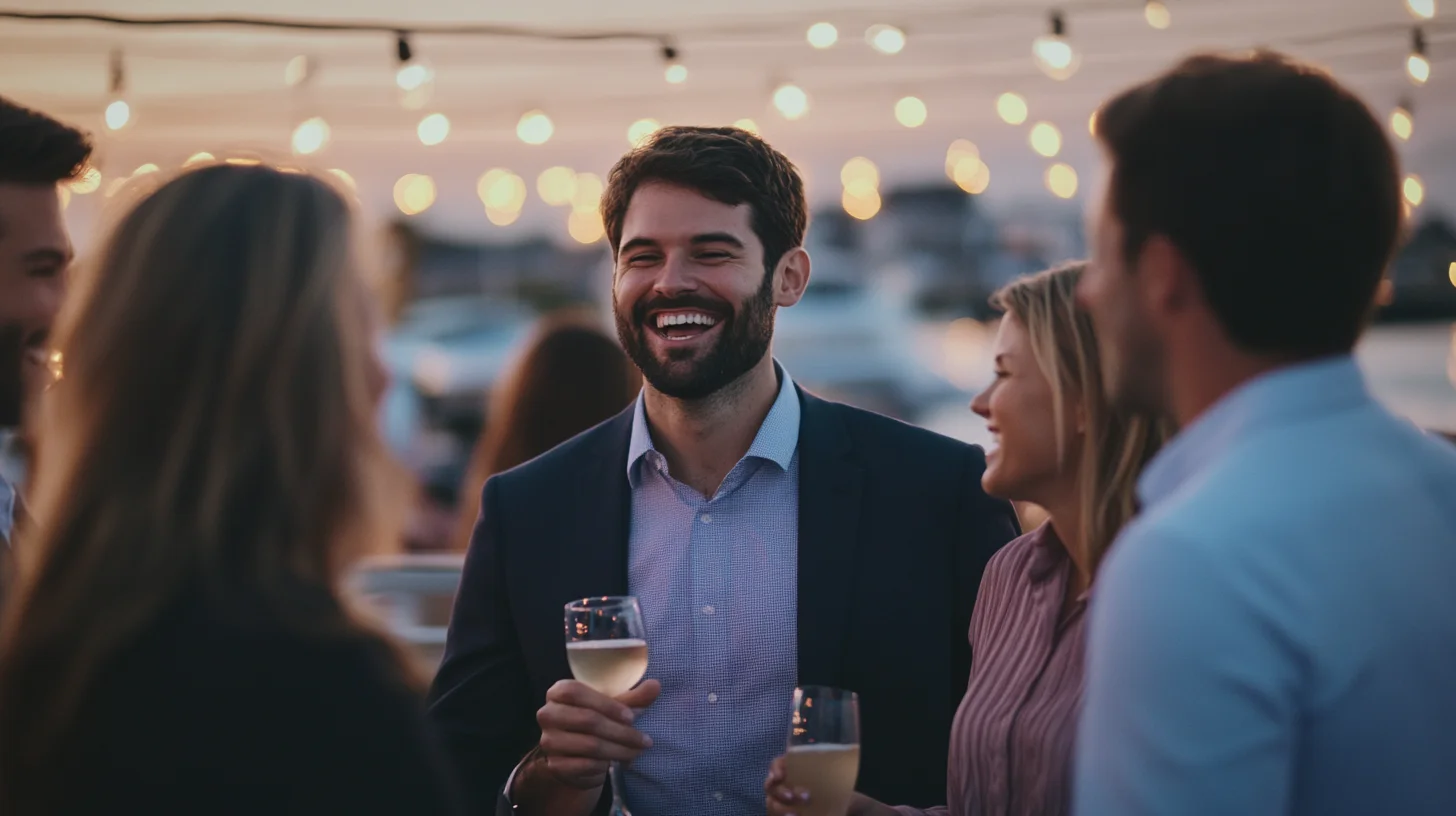
South Shore Photography, based in Rockland, MA, covers company events across Hingham, Scituate, Norwell, Duxbury, Marshfield, Cohasset, Hanover, Weymouth, Quincy, and Plymouth — from small team offsites to full holiday parties. Photographer Chris McCarthy has spent years covering the kinds of gatherings that shape how a company actually feels to work for, and here is what that coverage looks like when it's done well.
Most companies I work with book event photography the first time because a leader wants “a few good photos” from the holiday party or the summer outing. They book the second time because they've realized what they actually got was a year's worth of internal content, recruiting material, and a morale boost that was visible in the room the moment people saw themselves captured at their best. Event photography is one of the least-discussed and highest-leverage investments a company can make in its culture — and on the South Shore, where the venues themselves are part of the story, it's especially worth doing well.
Why Event Photography Matters for Company Culture
There is a specific moment I watch for at every company event I cover: the moment a group of coworkers looks at a photo together the next day. People lean in. They point out friends. They tag each other. They laugh at a genuine moment they almost forgot happened. That response is culture working — and it is almost impossible to manufacture without real photographs of real moments.
When leadership talks about engagement, they usually talk about recognition, belonging, and shared purpose. Professional event photography makes those abstractions tangible. A picture of a long-tenure employee being recognized in front of the whole team is recognition that can be reshared, printed, referenced, and remembered. A candid of two coworkers mid-laugh is belonging, documented. A group shot of the full team under the South Shore sky at a summer outing is shared purpose, visible.
Phone photos from scattered attendees capture none of this consistently. A dedicated photographer covering the whole event produces a coherent visual record — one that the company actually owns, can use freely, and can draw on for months afterward.
What Strong Event Coverage Actually Captures
When I cover a company event on the South Shore, I am working on two tracks at once. The first is the must-have list — the formal coverage that has to be captured: awards, speakers at the podium, the full-group photo, leadership with honorees, the cake or the toast or whatever specific moments matter to the host. I build this list with the organizer before the event and move through it efficiently so nobody is chasing people down at the end.
The second track is the culture capture — the candid, genuine moments that only happen when people forget a camera is in the room. A handshake between a new hire and a senior engineer. A manager quietly introducing someone to a client. The group that breaks into laughter at a joke nobody else heard. These are the images that people reshare internally months later. They are also the ones that matter most for recruiting.
Both tracks matter. A gallery full of only candids and no group shots leaves the organizer disappointed. A gallery full of only posed shots feels stiff and unused. The craft of event photography is delivering both, from the same event, without making either feel forced.
How These Photos Get Used Throughout the Year
The companies that get the most value from event photography think about usage before the event, not after. Here is what I see the best-run companies on the South Shore doing with their event galleries.
Internal communications. A steady stream of event photos in the company newsletter, intranet, or Slack channels keeps the energy of the event alive. Pictures from a holiday party can carry morale through January. Images from a summer outing can anchor a “year in review” email. Photos of a recognition moment can accompany the anniversary announcement six months later.
Recruiting and careers pages. Stock photos on a careers page signal that a company has nothing real to show. Authentic event photos signal the opposite — that there are actual people here who actually spend time together. Candidates read that instantly, and it shapes whether they apply. Companies that pair event gallery images with professional team headshots create a recruiting presence that is both polished and human.
Social media and company channels. A single great event photo drives more engagement on social channels than a dozen polished corporate graphics. Companies that invest in branding photography alongside event coverage build a visual content library that compounds over time — former employees engage, candidates notice, clients see the team they are working with.
Onboarding and anniversaries. New hire decks, work anniversary gifts, retirement slideshows, farewell emails — all of these pull from the archive of event photography a company builds over the years. The longer you build it, the more value each new event contributes.
Planning Event Coverage for Company Gatherings on the South Shore
Good event coverage is planned coverage. Before I arrive, the organizer and I talk through the run of show, the priority moments, the venue, the lighting, and any constraints — surprise guests, confidential attendees, photographers-not-welcome areas. That ten-minute call is the single biggest predictor of how well the final gallery turns out. If you are just starting to plan, my event photography booking guide covers the full timeline from initial outreach to delivery.
I also ask about usage upfront. If the company plans to use the photos on a careers page, we will make sure to capture team compositions that work there. If the holiday party will produce a recap email, we will make sure there is a strong opening image. Planning coverage around intended use produces galleries that get used.
South Shore venues specifically come with their own considerations. The waterfront venues in Scituate and Hingham have beautiful golden hour light that closes fast in the fall and winter. The inland function halls in Rockland, Hanover, and Norwell lean on interior lighting that requires the right gear to handle cleanly. Outdoor company outings at places like World's End or the South Shore country clubs need weather contingency plans built in. Knowing the venues matters.
Common Types of Company Events I Photograph
Holiday parties. December is the single busiest month for company event photography on the South Shore. Restaurant and function hall parties, private dinners, small-team celebrations — these sessions typically run two to four hours and produce the widest range of usable images for the following year.
Summer outings and offsites. Outdoor gatherings across the South Shore — waterfront cookouts, golf outings, beach days, team olympics — are my favorite events to shoot. The natural light is generous, the energy is high, and the photos tend to land in the “this is what this company feels like” category that recruiting teams love.
Recognition events and awards nights. Whether it's a quarterly all-hands where top performers are called out or a formal annual awards evening, these events benefit massively from careful coverage of the recognition moments. Years later, those photos are still the ones the honorees keep. Learn more about what full event photography coverage includes.
Leadership retreats and planning offsites. Smaller, more intimate gatherings where leadership teams gather to plan or reset. Coverage is lighter-touch, more candid, focused on collaboration moments and environmental context — the kind of images that make a strategy deck or a company update feel grounded and real.
Anniversary and milestone celebrations. Five-year anniversaries, ten-year anniversaries, company milestone events — these are the moments that deserve the fullest coverage because they are not going to happen again. Clients I covered for a tenth anniversary are still using the images four years later.
What to Look For in an Event Photographer for Your Company
The skill set for event photography is different from studio portraits or family sessions. You want someone who can work quickly, read a room, and stay invisible while still capturing what matters. They should be able to hand you a shot list during planning and execute it without supervision on the day. They should know how to handle tricky venue lighting without relying on intrusive flash. And they should deliver a fully edited gallery within a reasonable window — typically ten to fourteen days for most events.
Reliability matters more than you might expect. Event photography is a one-shot deal — there is no reshoot, no second chance at a moment. Book someone who shows up early, communicates clearly, and has backup equipment. A failed camera battery that ruins the awards ceremony is not a story any organizer wants to tell.
Finally, look for someone local. A photographer who knows the South Shore venues, the drive times, the light, and the rhythm of local events is going to deliver better coverage than someone arriving cold from Boston or the Cape. Familiarity with the venue is a real advantage. For a deeper look at the techniques behind strong event coverage, see my post on how a South Shore event photographer captures what matters.
Frequently Asked Questions
How far in advance should we book an event photographer for a company event?
For South Shore company events with fixed dates — spring and fall retreats, summer outings, December holiday parties — reach out at least six to eight weeks ahead. Holiday parties in particular should be locked in by late September. Last-minute coverage is sometimes possible, but photographers who know local venues book quickly once the calendar flips.
Do you provide images we can use internally and on social media?
Yes. Every company event I cover includes a full edited gallery delivered with usage rights for internal communications, social media, careers pages, and recruiting material. Images are delivered in high-resolution for print and web-optimized sizes for email newsletters, Slack, intranets, and social channels. Most companies use event photos for months after the event ends.
Can you photograph both the official program and candid moments?
That is exactly the approach I take. Before the event, we build a short shot list of must-have coverage — awards, speakers, group photos, leadership introductions — and I move through those efficiently. The rest of the time is spent capturing genuine moments between those staged ones. Both kinds of images matter and serve different purposes.
Do you photograph company events outside the South Shore?
My primary coverage area is the South Shore of Massachusetts — Rockland, Hingham, Scituate, Duxbury, Cohasset, Plymouth, Marshfield, Norwell, Hanover, Weymouth, and Quincy. I regularly travel into Boston, the Cape, and the MetroWest area for client events and offsites. For venues outside a reasonable radius, travel is quoted separately and built into the booking.
What does professional event coverage cost for a company gathering?
Pricing depends on event length, size, and deliverables. A typical two-to-three hour South Shore company event runs in the range most businesses have already budgeted for a single ad campaign — a fraction of the cost of the event itself, delivering content that gets used for a year or more. I provide firm quotes once I understand the event scope. Reach out with your event details for a same-day response.
PRO TIP
“The companies that get the most out of event photography are the ones who decide on the usage before the event happens. Tell me where the photos are going to live and I can make sure the gallery delivers exactly that — not a pile of pretty images you never quite figure out what to do with.”
Book Coverage for Your Next Company Event
Share your event details and I'll send back availability, a shot-list framework, and a firm quote within one business day.

ABOUT THE AUTHOR
Chris McCarthy is a portrait photographer based in Rockland, MA who has been photographing the South Shore full-time since opening his studio in 2014 — more than a decade of outdoor and lifestyle portrait work across the region. He specializes in headshots, senior portraits, branding, family, and maternity photography — shooting at his studio at 83 E Water Street and on-location throughout southeastern Massachusetts at places like World's End, Scituate Harbor, Duxbury Beach, and the North River conservation land in Norwell.
More from the Blog
BOOKING GUIDE
Event Photography on the South Shore: A Booking Guide
What to know before hiring an event photographer for your next gathering on the South Shore.
BEHIND THE LENS
How a South Shore Event Photographer Captures What Matters
Great event photography is about anticipation, positioning, and reading the room — not luck.