PHOTOGRAPHY EDUCATION · BEGINNER GUIDE
The Exposure Triangle Explained: A Beginner's Guide to ISO, Aperture, and Shutter Speed
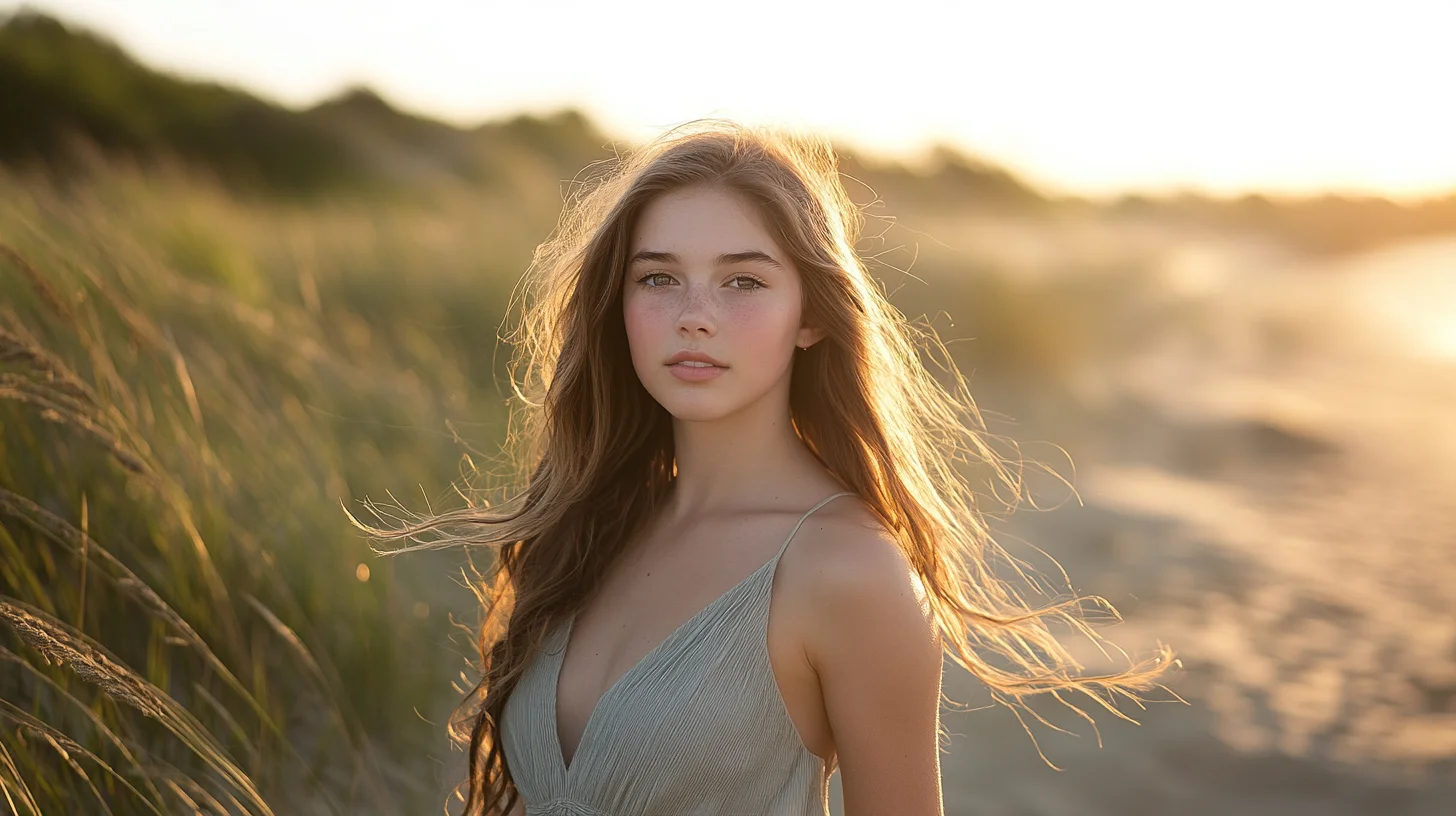
South Shore Photography, based in Rockland, MA, serves portrait clients across Hingham, Scituate, Duxbury, Norwell, Marshfield, Cohasset, Hanover, Weymouth, and Plymouth. Photographer Chris McCarthy has spent years explaining the fundamentals of exposure to beginners — and the most common mistake he sees is treating the exposure triangle like a formula to memorize rather than a relationship to understand.
I've had some version of the exposure triangle conversation dozens of times — at the end of senior portrait sessions when clients ask how I got that shot, with people who just bought their first mirrorless camera and are frustrated that auto mode isn't cutting it, with parents who want to photograph their kids' sports without every image being a blur. Every time, the conversation starts the same way: they've read something that made the exposure triangle sound complicated. They're trying to remember rules. They're confused because changing one setting seems to break everything else. What I tell them is this — stop trying to memorize it and start trying to feel it. The triangle isn't a test. It's a relationship. And once you understand the relationship, every camera you ever pick up will start making sense.
What the Exposure Triangle Really Is (and Why Most Beginners Get It Wrong)
The most common mistake I see beginners make is treating the exposure triangle as a memorization problem. They write down the definitions — ISO is sensitivity, aperture is the opening, shutter speed is the time — and then wonder why their photos still aren't coming out right. The definitions aren't wrong, but the framing is. The exposure triangle isn't three separate settings you look up independently. It's one system that controls how much light reaches your sensor, and the three settings are just different levers on that same system.
Think of it this way: your sensor needs a specific quantity of light to produce a correct exposure. Too little and the image is underexposed (dark, muddy shadows). Too much and it's overexposed (blown highlights, washed-out colors). ISO, aperture, and shutter speed are three different ways to give the sensor more or less light — and they all talk to each other. Change any one of them and you have to compensate with at least one of the other two, or your exposure shifts.
The “wrong” framing is thinking there's a correct setting for each situation that you look up. The “right” framing is understanding that there are infinite correct combinations — and the combination you choose determines what your photo looks like beyond just the brightness. That's where the creative power of the triangle lives.
ISO: How Sensitive Your Sensor Is to Light
ISO measures how sensitive your camera's sensor is to light. A low ISO like 100 or 200 means the sensor is relatively insensitive — it needs a lot of light to produce a correct exposure. A high ISO like 3200 or 6400 means the sensor is highly sensitive and can work with much less light. The tradeoff: as ISO increases, digital noise (that grainy, speckled quality) increases too.
The good news is that modern cameras have gotten dramatically better at handling high ISO. On a current full-frame mirrorless camera, ISO 3200 is clean enough for most uses — print, web, even modest enlargements. ISO 6400 is workable. ISO 12800 is where things start to look obviously noisy, though it's still far better than a missed shot. The bad news is that beginners often treat high ISO as shameful and underexpose their images trying to keep ISO low — which produces dark, muddy files that are far worse than a slightly noisy but correctly exposed image.
Real example: last fall, I was shooting a senior portrait session at Duxbury Beach. We started at golden hour with plenty of light — ISO 200, no problem. About 30 minutes after sunset, the light was dropping fast but the sky still had a gorgeous blue twilight glow. I pushed ISO to 3200, opened my lens to f/1.8, and slowed my shutter to 1/200s. The resulting images were clean, properly exposed, and captured that magical post-sunset quality that you simply cannot get at 3 in the afternoon. ISO 3200 made those images possible. Treating it as off-limits would have meant stopping the session 20 minutes too early.
Aperture (f-stop): How Wide Your Lens Opens
Aperture is the opening in your lens that controls how much light passes through to the sensor. It's measured in f-stops, and this is where beginners consistently get confused — because the numbers run backwards. A lower f-number (f/1.8, f/2.8) means a wider opening, which means more light and a shallower depth of field. A higher f-number (f/8, f/11) means a narrower opening, less light, and more of the scene in sharp focus.
The depth of field effect is the reason aperture matters so much for portrait work. That dreamy, blurred background you see in professional portraits — the technical term is bokeh — comes from shooting at a wide aperture like f/1.8 or f/2.8. The subject is sharp, the background melts into soft color and light. At f/8, everything from three feet to thirty feet might be in focus. Neither is wrong — they produce different looks for different purposes.
Here's a real situation where aperture choice genuinely mattered: I was photographing a family of five at Norris Reservation in Norwell last October. The trees were at peak color and I wanted that fall background in the frame. If I'd shot at f/1.8, the mom at one end of the group would have been sharp and the dad at the other end would have been soft — the depth of field would have been too shallow for five people spread across six feet. I shot at f/2.8, which gave me just enough depth of field to keep everyone acceptably sharp while still blurring the trees enough to feel like bokeh rather than a busy background. Aperture choice was the entire creative decision in that moment.
Shutter Speed: How Long Light Hits the Sensor
Shutter speed is how long the camera's shutter stays open, exposing the sensor to light. It's measured in fractions of a second: 1/1000s is very fast (freezes motion), 1/30s is slow (motion blur risk). The faster the shutter, the less light reaches the sensor — but motion is frozen. The slower the shutter, the more light — but anything moving (including the camera itself) can blur.
There's a practical rule of thumb for handheld shooting: your shutter speed should be at least the reciprocal of your focal length to avoid camera shake. Shooting at 85mm? Stay at 1/100s or faster. Shooting at 200mm? Stay at 1/200s or faster. Modern image stabilization helps extend this, but the principle still applies. If you're handholding at 1/30s on an 85mm lens, you're likely to see blur from camera movement even if your subject is perfectly still.
The real constraint comes when photographing kids. At a birthday session in Hingham last summer, I was photographing kids running across a backyard lawn. At 1/200s, every frame had motion blur on the arms and legs — not artistic blur, just mushy movement. I bumped shutter speed to 1/500s and the problem disappeared. Freezing motion on active kids requires at minimum 1/400s, and 1/800s if they're really moving. The tradeoff: faster shutter means I need to compensate by opening the aperture or raising ISO, which is exactly the triangle in action.
How the Three Settings Trade Off Against Each Other
This is the part that clicks everything together. Each stop of adjustment in one setting has an equivalent stop adjustment in the others. One stop of light = double or half the exposure. Opening aperture from f/4 to f/2.8 is one stop (doubles the light). Doubling shutter speed from 1/200s to 1/400s is one stop (halves the light). Doubling ISO from 400 to 800 is one stop (doubles sensor sensitivity, so you need half the light).
In practice: if you're correctly exposed at f/4, 1/200s, ISO 400, and you want shallower depth of field so you open to f/2.8 (one stop wider), you have one extra stop of light hitting the sensor. To compensate, you can either speed up the shutter to 1/400s (one stop faster) or drop ISO to 200 (one stop less sensitive) — or split the difference. Any of those combinations produces the same overall exposure, just with different creative characteristics.
The mental model I give clients: think of it as a budget. You need a fixed amount of light. Each setting either spends light or saves it. Open aperture = spend more. Faster shutter = save more. Higher ISO = need less. When you change one, you always rebalance the other two to keep the total the same. Once that clicks, you stop memorizing and start thinking.
Should I Always Shoot in Manual Mode? (The Honest Answer)
Every photography tutorial seems to end with “just shoot manual.” I understand why — it forces you to think about all three settings simultaneously, which is good for learning. But the honest answer to whether you should always shoot manual is: no. Working photographers use the mode that gives them the most control over the variable that matters most in a given situation.
I shoot Aperture Priority mode for roughly 80% of my outdoor portrait work. Here's why: on location, the thing I care most about is depth of field. I want f/2.8 for a couple, f/4 for a group, f/1.8 for a moody solo portrait. I lock that setting and let the camera handle shutter speed automatically as clouds pass, sun dips toward the horizon, and light levels shift minute by minute. It means I'm never missing shots while fiddling with shutter speed. I just keep an eye on the shutter speed the camera is choosing and adjust ISO if it starts going somewhere I don't want.
Manual mode is essential for specific situations: studio strobe work (where the flash duration controls motion, not the shutter), video (where shutter speed needs to stay at a fixed multiple of frame rate), and complex lighting scenes where the camera's meter keeps getting fooled. Those situations exist, and they matter. But treating manual mode as a virtue for its own sake — as evidence that you're a “real” photographer — is a posture, not a practice. The goal is great images, not manual mode bragging rights.
A Real Session Walk-Through: Senior Portraits at Duxbury Beach, Golden Hour
Let me walk through a real session so the triangle stops being abstract. Last September, I photographed a senior portrait session at Duxbury Beach starting at 5:30 PM — about 90 minutes before sunset. Here's exactly how my settings evolved across the session.
At 5:30 PM, full sun still strong: f/2.8, 1/500s, ISO 200. Plenty of light, shutter fast enough to freeze any hair movement in the sea breeze, aperture giving me that soft background blur against the ocean. By 6:15, the sun was lower and the light was going golden — the best light of the session. I dropped shutter to 1/320s and pushed ISO to 400. Aperture stayed at f/2.8 throughout because I wanted consistent background separation.
After sunset, around 7:00 PM, we were in the blue hour — soft, diffused, magical. ISO went to 1600, shutter slowed to 1/200s (just fast enough to avoid camera shake at 85mm). At 7:15, ISO 3200, shutter 1/160s, still f/2.8. The files from that final 15 minutes were the client's favorites. Aperture never moved. ISO did the work of tracking the changing light. That's the triangle in action — understanding which lever to pull at each moment so the creative constant (depth of field) stays consistent while the technical variable (exposure) adjusts to the light.
The Settings Cheat Sheet: Where to Start in Common Situations
These are the starting points I use when I arrive at a location. They're not rules — they're baselines to dial in from. Every scene is different, and your camera's histogram is always the final word on whether you're correctly exposed.
- Outdoor portrait, full sun: f/2.8, 1/500s, ISO 100 — plenty of light, keep ISO low and shutter fast
- Outdoor portrait, golden hour: f/2.8, 1/250s, ISO 400 — light is dropping, open up a little on shutter and push ISO gently
- Outdoor portrait, after sunset / blue hour: f/1.8, 1/200s, ISO 1600–3200 — open lens wide, push ISO, keep shutter at safe minimum
- Indoor portrait, window light: f/2.8, 1/200s, ISO 800 — window gives decent light but ISO needs to work
- Indoor event, ambient light only: f/2.8, 1/160s, ISO 3200 — this is where modern cameras earn their price tag
- Action / kids running outdoors: f/4, 1/800s, ISO whatever the light demands — shutter is king here, everything else adjusts around it
Notice what stays consistent across most portrait situations: aperture in the f/1.8–f/4 range for background separation, and shutter speed at or above 1/160s to avoid camera shake. ISO is the variable that adapts to the available light. That's not the only way to approach it — but it's a framework that works for outdoor portrait work on the South Shore across all seasons.
Frequently Asked Questions
What is the exposure triangle in photography?
The exposure triangle is the relationship between three camera settings that all control exposure: ISO (sensor sensitivity), aperture (lens opening), and shutter speed (how long light hits the sensor). Changing one always forces a tradeoff with the other two. It's the foundational mental model behind every photograph — not a formula to memorize, but a balance to understand.
Should beginners shoot in manual mode?
Not always. I shoot Aperture Priority mode for about 80% of my outdoor portrait work — it lets me lock the look I want (shallow depth of field at f/2.8) and the camera handles shutter speed automatically as light changes. Manual mode is essential for studio strobe work and tricky mixed lighting, but it's not a virtue in itself. The goal is controlling the setting that matters most for your shot, not shooting manual for its own sake.
What is the easiest way to remember the exposure triangle?
Think of it as a budget. You need a fixed amount of light to make a correct exposure. Each setting “spends” or “saves” light. Open the aperture by one stop, you add one stop of light — meaning you can drop ISO by one stop or speed up the shutter by one stop and end up with the same overall exposure. It's a balance, not a formula. Once that clicks, you stop second-guessing every setting change.
Does a higher ISO always mean a worse photo?
No. Modern full-frame cameras handle ISO 6400 cleanly enough that the difference is invisible at print or web sizes. A sharp, properly exposed photo at ISO 3200 is dramatically better than a blurry, underexposed photo at ISO 200. ISO is a tool, not a sin. Use it when the light demands it — the alternative is worse images, not better ones.
What aperture should I use for portraits?
For single-subject portraits, f/2.8 to f/1.8 gives you that flattering shallow depth of field with creamy background blur. For couples, f/2.8 to f/4 keeps both people in sharp focus. For families of three or more, f/4 to f/5.6 keeps everyone in the frame sharp while still separating subjects from the background. The right aperture depends on how many people you need to keep in focus — it's always a tradeoff between background blur and depth of field.
PRO TIP
“The fastest way to internalize the exposure triangle isn't reading about it — it's shooting the same scene at three different aperture/shutter/ISO combinations and seeing what changes. Spend 20 minutes at golden hour photographing the same tree at f/1.8, f/4, and f/8. You'll never forget what aperture does.”
Ready to Book a Portrait Session?
Whether you are looking for senior portraits, family photography, or branding work, every session is personally photographed by Chris McCarthy across the South Shore.

ABOUT THE AUTHOR
Chris McCarthy is a portrait photographer based in Rockland, MA who has been photographing the South Shore full-time since opening his studio in 2014 — more than a decade of outdoor and lifestyle portrait work across the region. He specializes in headshots, senior portraits, branding, family, and maternity photography — shooting at his studio at 83 E Water Street and on-location throughout southeastern Massachusetts at places like World's End, Scituate Harbor, Duxbury Beach, and the North River conservation land in Norwell.
More from the Blog
SERVICE
Senior Portraits — South Shore
Where exposure control meets late-golden-hour senior sessions →
PILLAR GUIDE
The Complete Photography Basics Guide
Where the exposure triangle fits in the bigger picture — focus, gear, file formats, and editing all covered together.
CLIENT GUIDE
Common Beginner Photography Questions: A First-Timer's Guide
The most-asked questions from first-time portrait clients on the South Shore.
LOCATION GUIDE
Best Golden Hour Portrait Locations on the South Shore
Where I shoot when the light gets perfect — across Hingham, Scituate, Duxbury, and beyond.